






Simultree Review – A Tiny, Smart Incremental About Playing Scientist
Simultree packages evolution-like life sims into a cosy incremental experience: tinker with genes, harvest points with a magnifying glass and enjoy charming animations. Short, focused and surprisingly thoughtful.
I didn’t expect to feel like a lab-obsessed scientist within the first five minutes, but Simultree has that effect. It’s an incremental game that leans into biology-y vibes: you set up tiny lifeforms, watch them eat fruit, and scoop up points with a magnifying glass like some caffeinated researcher. If you like thoughtful idle mechanics with cute presentation and a short, tidy run time, this one scratches an itch without overstaying its welcome. Think of it as a calm evolution sandbox crossed with a compact strategy/idle hybrid.
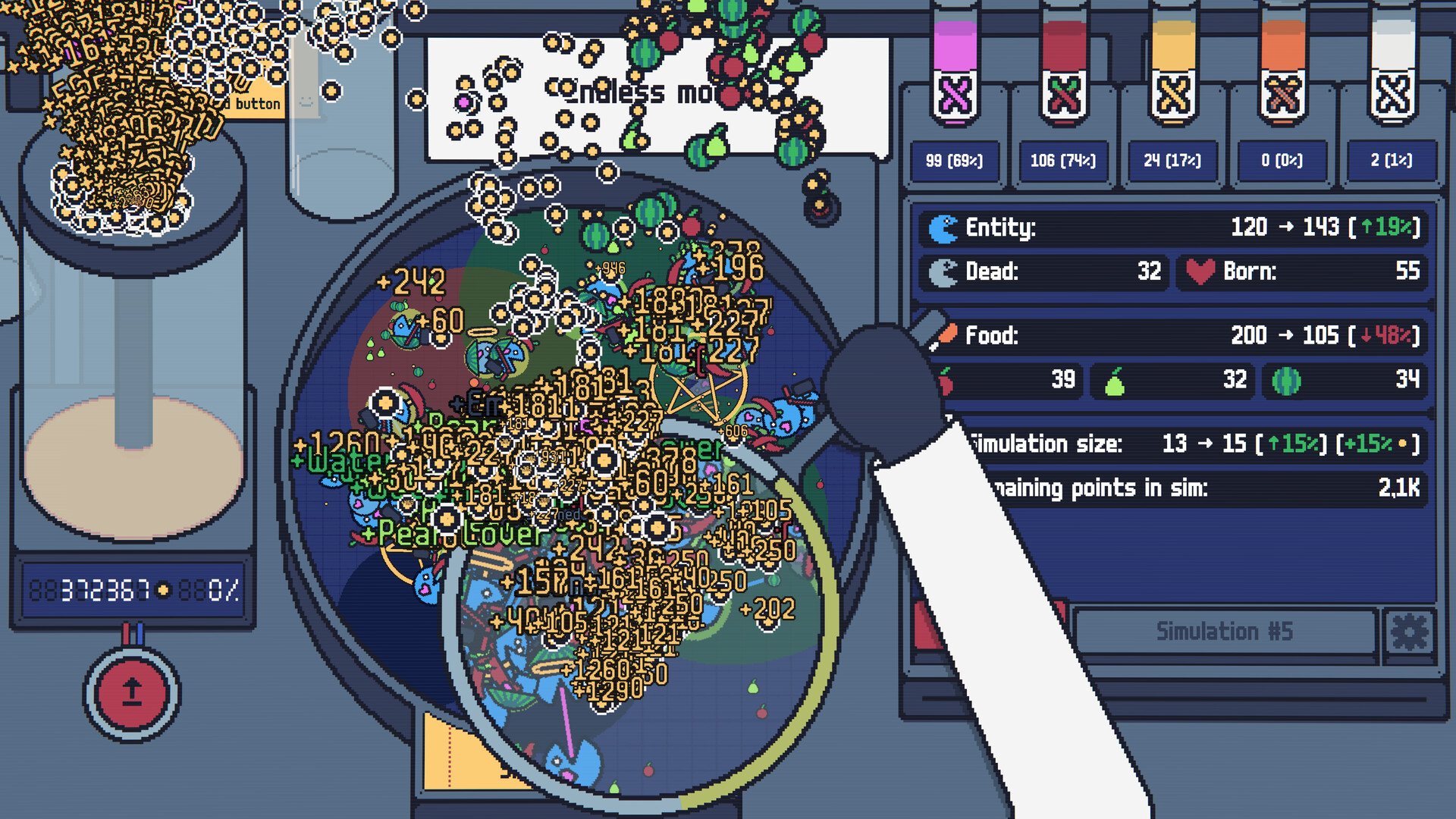
Watching Tiny Ecosystems Do Their Thing
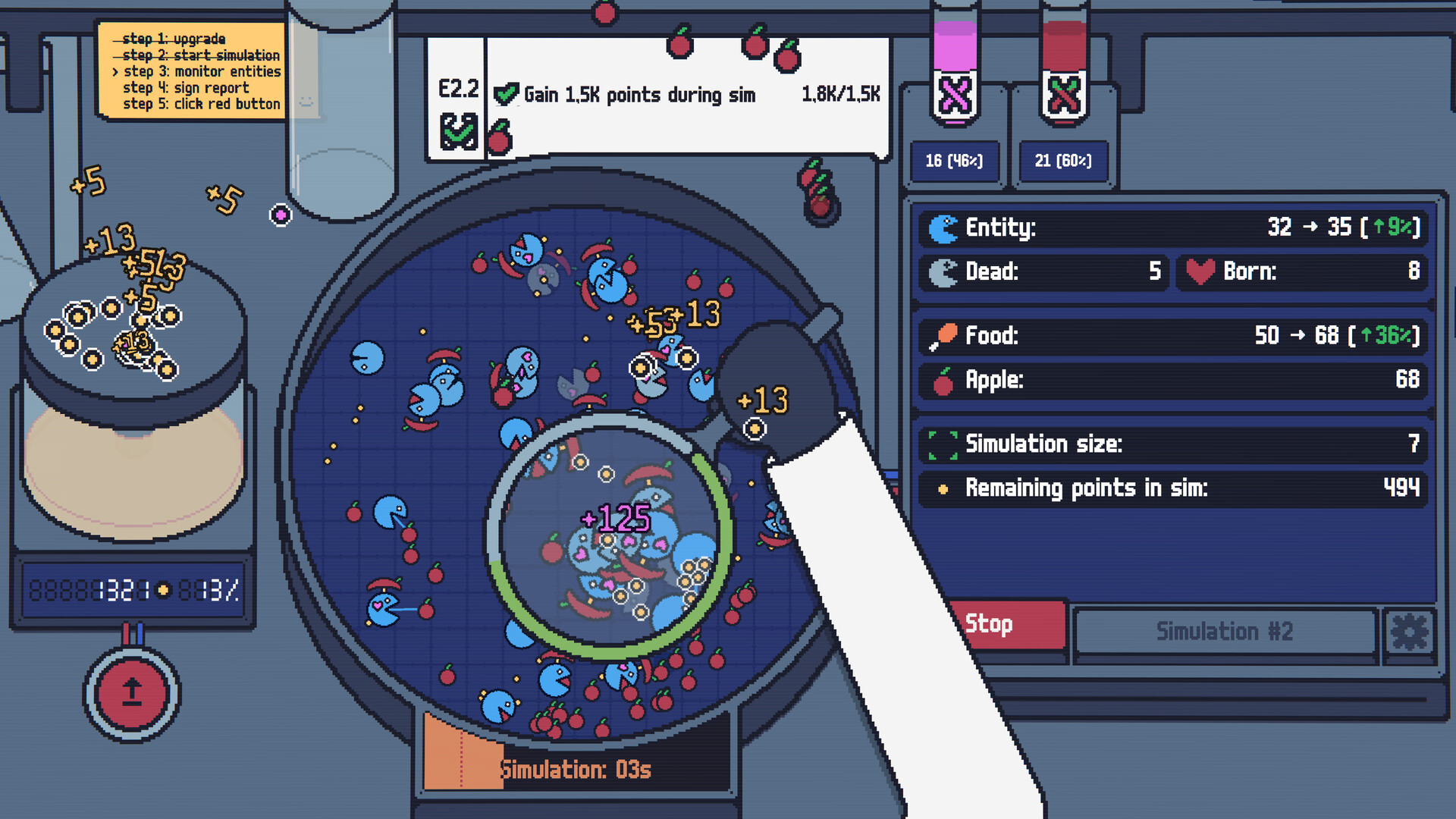
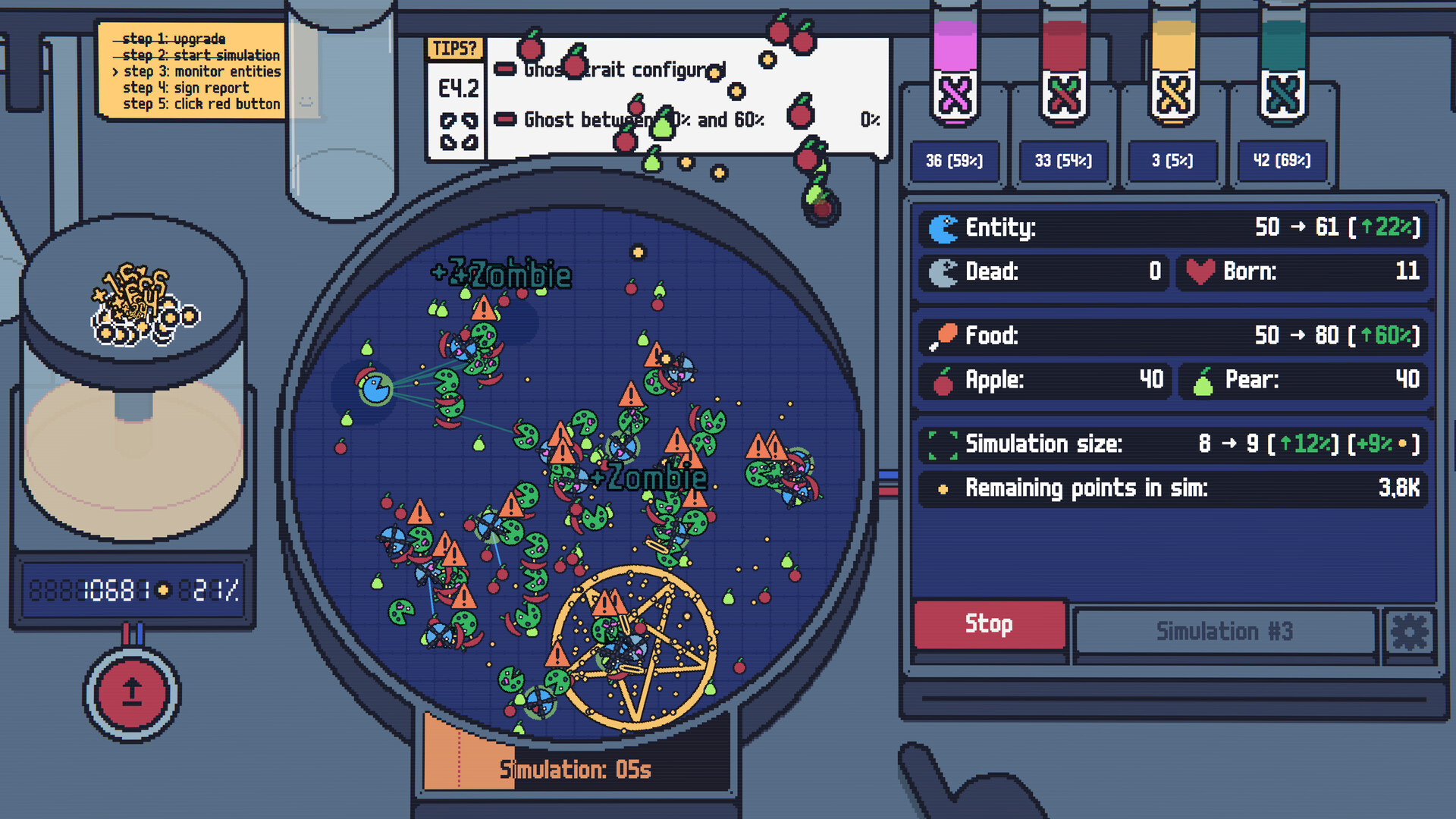
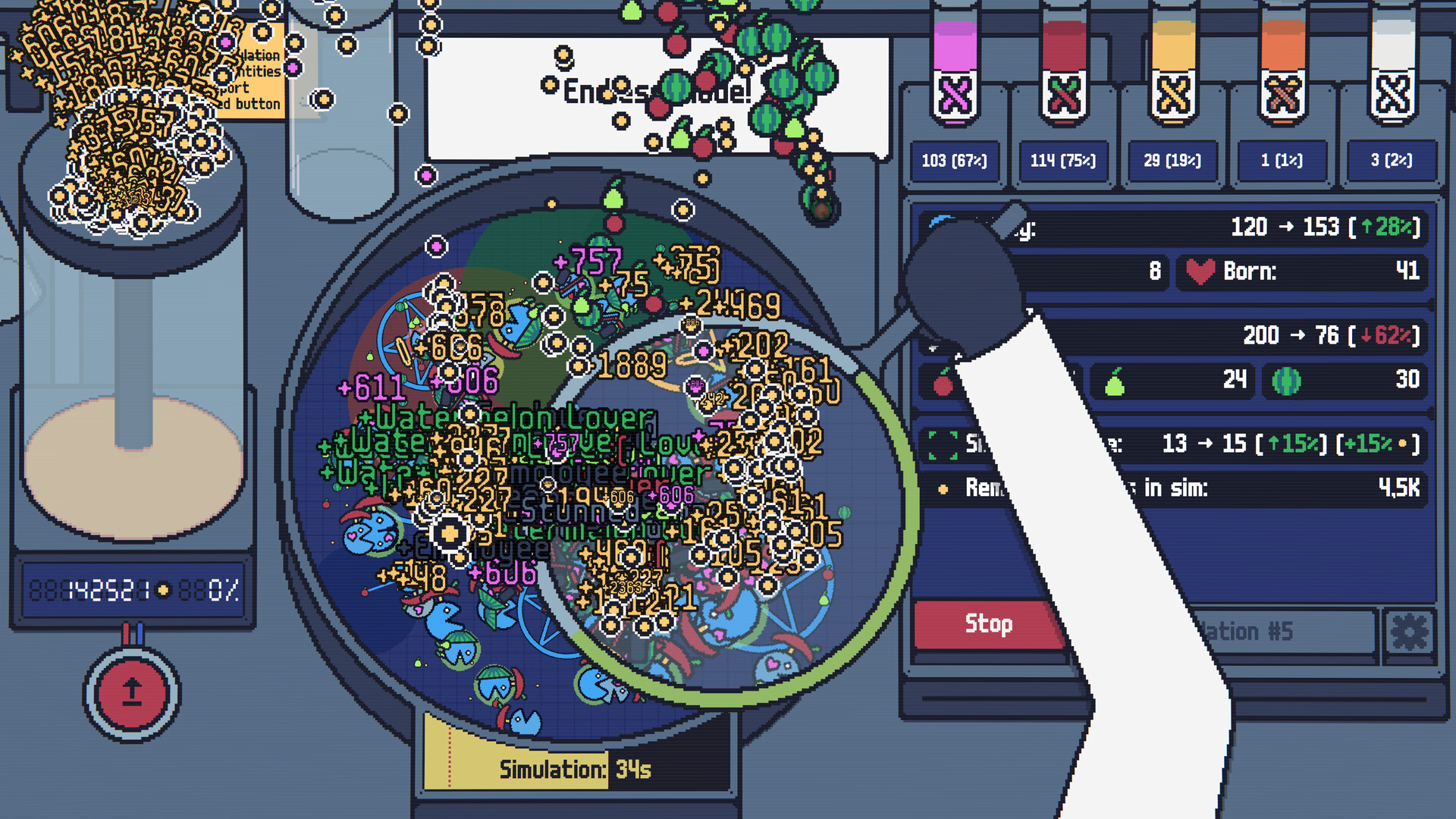
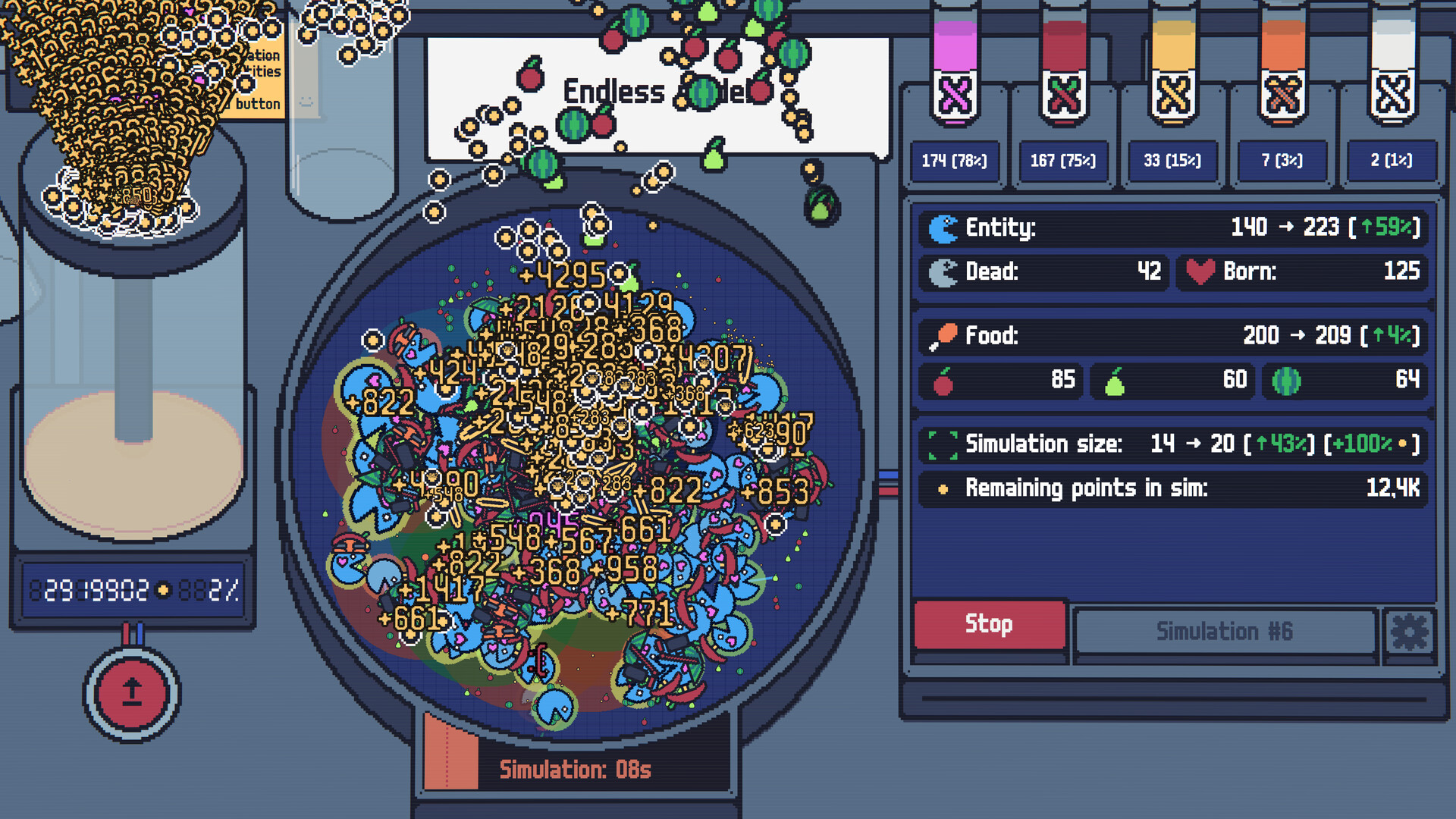
The heart of Simultree is deceptively simple: you run simulations of small entities that wander, eat fruit and produce points when they succeed. Your main interaction is observational—placing entities, tweaking their genes and occasionally using the magnifying glass to collect the points they generate. It feels like babysitting very determined little organisms: you don’t control them directly, but your upgrades, genetic tweaks and decisions shape their chances of survival. Early missions guide you gently—introducing traits, basic stats and the mechanic loop—while later stages demand real thought about compositions and timing. The pacing is neat: a single run takes a few hours to complete if you play methodically, so it never drags.
When Mutations Become Strategy
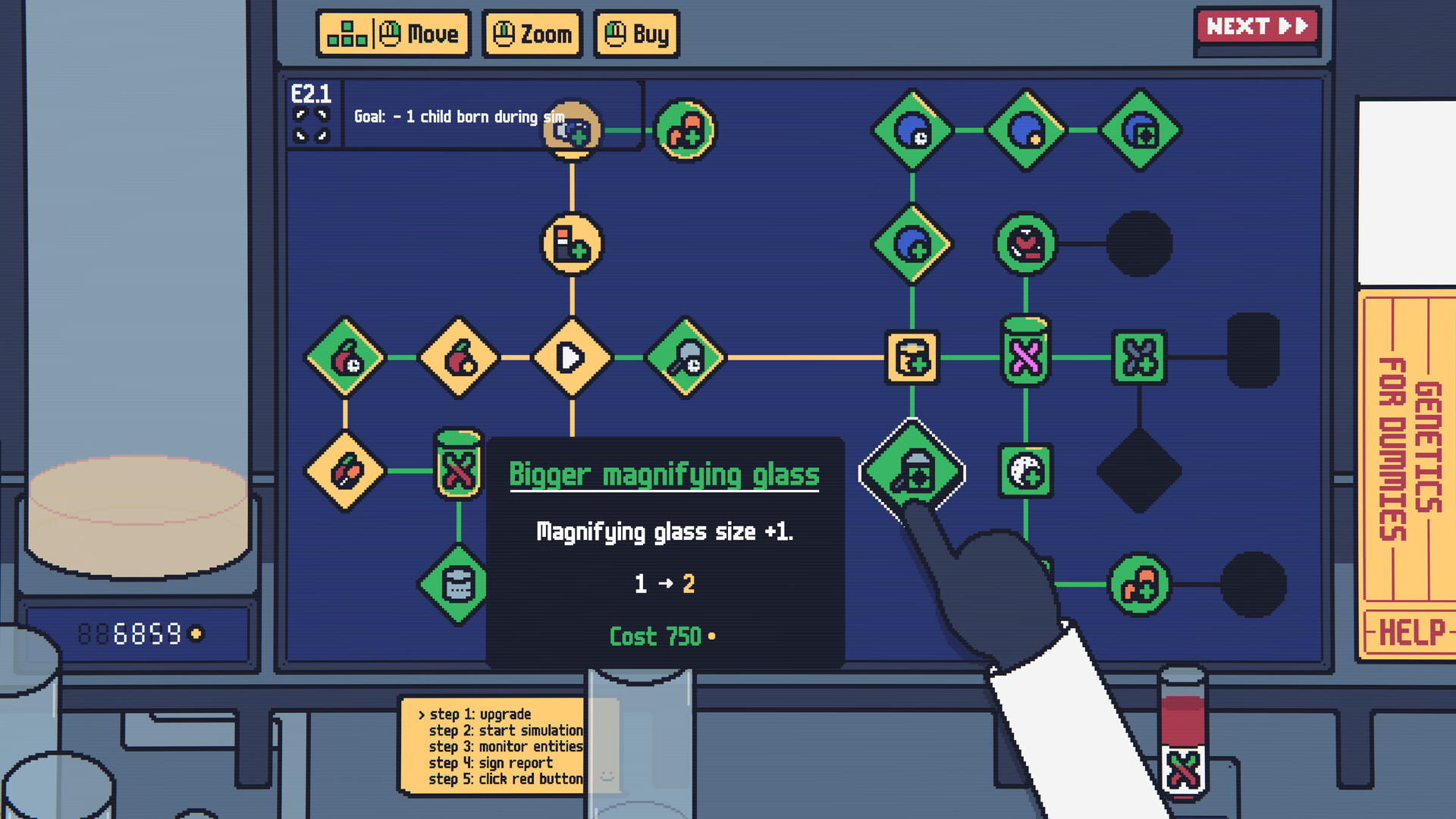
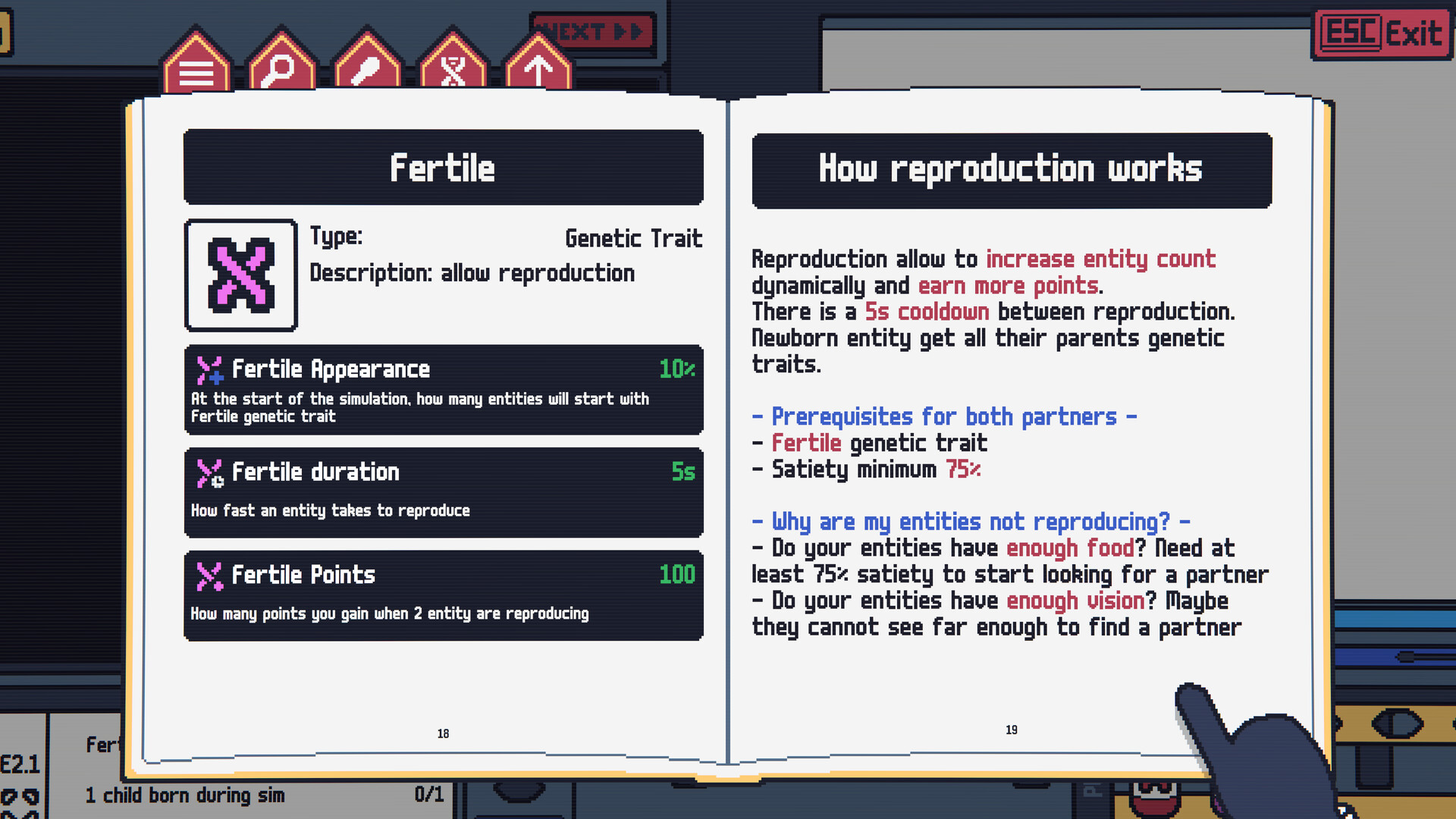
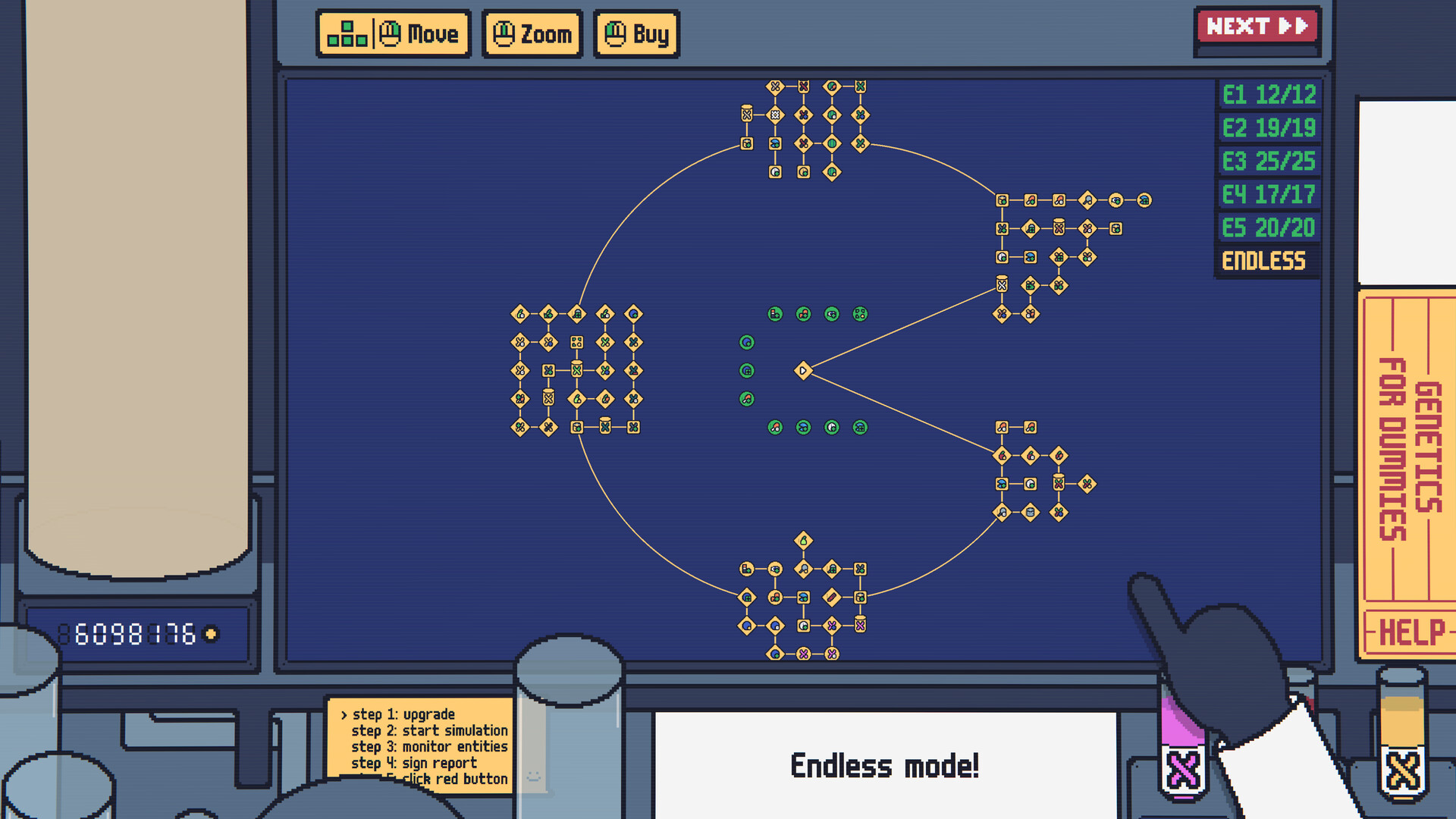
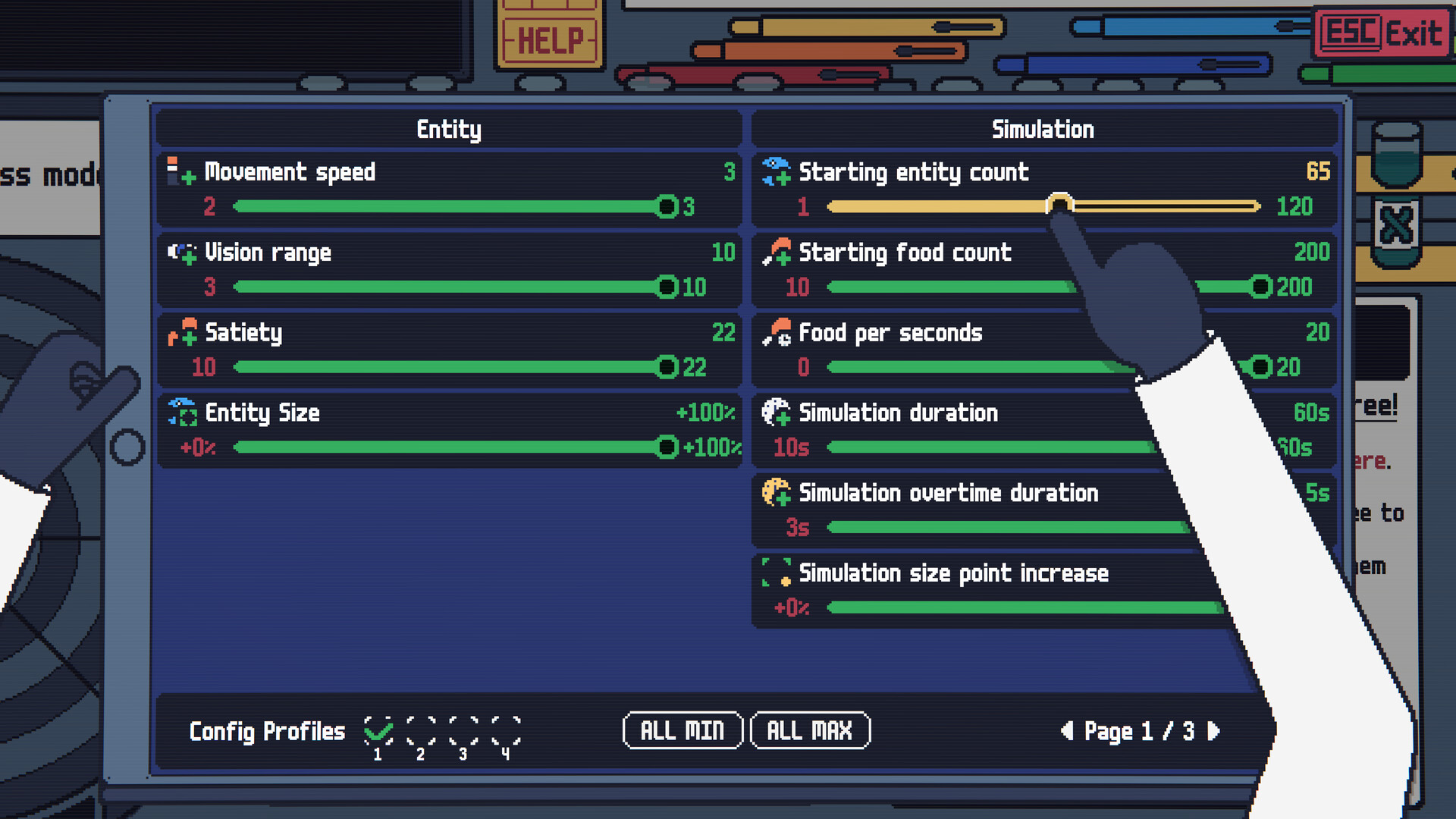
What makes Simultree stand out is how much depth the genetic traits and the tech tree squeeze into a compact package. With around ten genetic traits and 50+ stats to upgrade, choices matter: do you make fast little eaters that die quickly but produce bursts of points, or hardy slow grazers that keep a steady income? The skill tree (and unlockables like a bigger magnifying glass or automatic harvesters) lets you specialize and experiment, which turns each replay into a mini puzzle. There’s also an Endless Mode for those who want to keep tinkering after the main run, though opinions vary on how long the loop stays interesting. Small touches—the scientist’s arm as your cursor, the funneling of juice into containers—add personality and make mechanical feedback satisfyingly tactile.
A Tiny Studio’s Polish: Looks, Sound and Performance
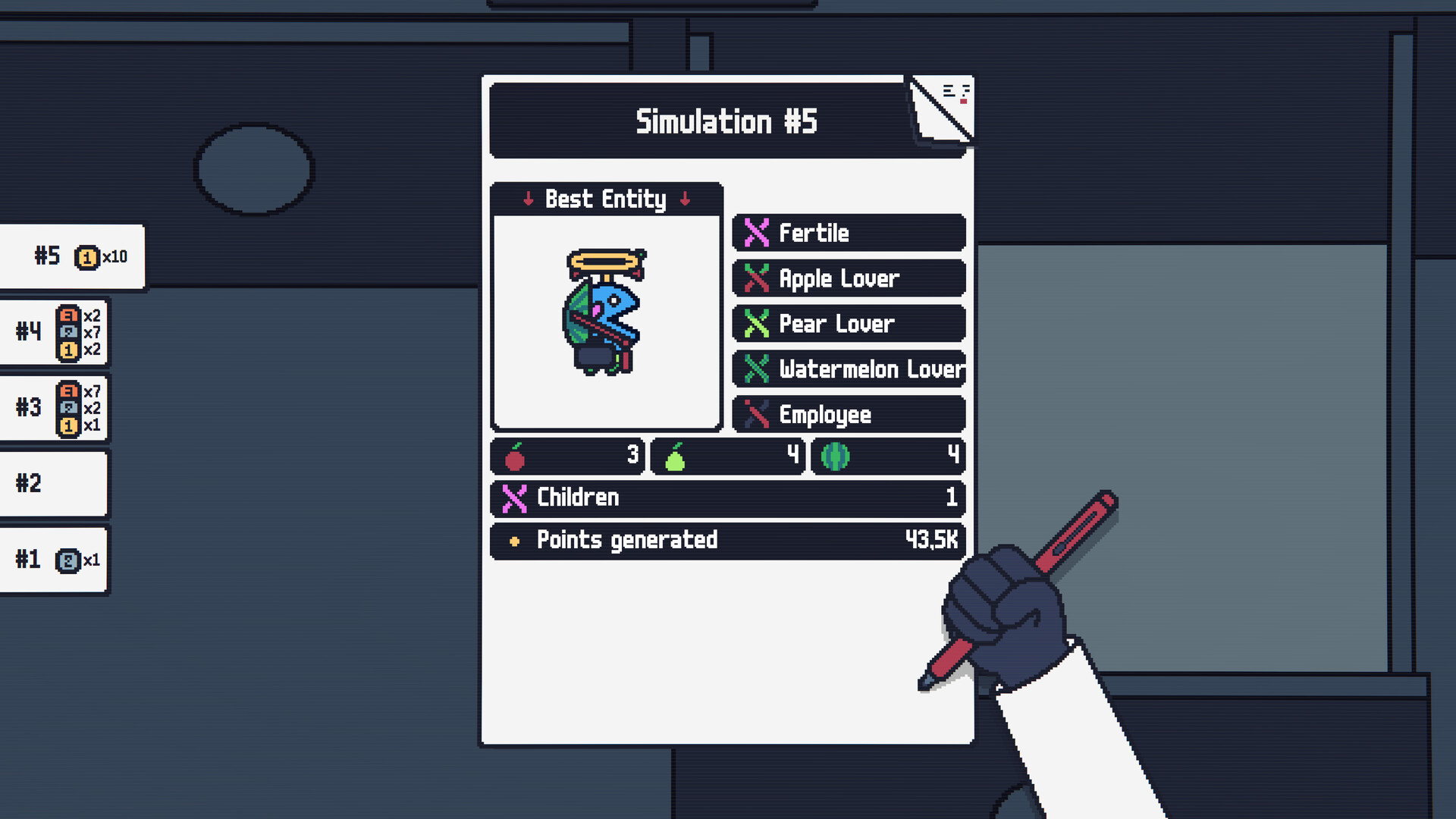
Visually, Simultree opts for clarity and charm rather than flashy spectacle: clean UI, cute animations and readable stats that always tell you what’s happening. The soundtrack and little sound cues (yes, that pleasing bubbling reminiscent of Game Dev Tycoon gets a shout-out from me) create a warm lab ambience without stealing focus. Performance is very forgiving on Windows, and the single-dev origin shows in lovingly polished small details: the report cards, the drawing board and the tiny celebratory animations when things click. Accessibility is straightforward—controls are simple, tooltips are helpful—though a few achievements and the endgame could use clearer guidance for completionists.
Simultree is a small game with big personality—perfect for a few focused play sessions when you want something clever but short. Buy it if you enjoy incremental mechanics with a dash of strategy and a lot of charm; hold off if you need endless, endlessly deep progression without prestige layers. For its price and polish from a solo dev, it’s a recommend.
Pros
- Strong, focused design—no bloat; every upgrade feels meaningful.
- Charming presentation with delightful small animations and sounds.
- Good mix of incremental and light strategy; choices matter.
- Affordable, polished solo-dev experience with an Endless Mode.
Cons
- Main run is short; replay incentive tapers off without prestige.
- Some achievements and endgame guidance are frustratingly vague.
- Endless Mode can feel thin once you’ve maxed obvious combos.
Player Opinion
Players consistently praise the game’s attention to detail—the scientist-cursor, the juice funnel animation, and the small report systems are repeatedly singled out as delightful touches. Many reviewers call it a perfect bite-sized incremental: tightly designed and satisfying without being bloated, with a typical completion time around three to five hours. Criticisms repeat too: folks want a prestige/reset system to make Endless Mode feel more rewarding, and some hidden achievements are maddeningly opaque, requiring tips to finish. Fans of casual simulation, idle games and light strategy say it scratches a particular itch; if you liked the pacing and tinkering from other idlers, chances are you’ll enjoy this one.