




Run TavernQuest Review – You’re the Game, Steve is the Player
A wry, role-reversing text-adventure where you play the parser and watch a hapless player called STEVE bumble toward (or away from) heroics. Narration is excellent, pacing sometimes wobbly, but the jokes land often.
I went into Run TavernQuest expecting an odd little indie riff on classic text adventures, and it delivered an identity flip I didn't quite see coming: you're the command parser, not the player. That reversal creates a lot of comic friction — you get to shepherd a delightfully clueless NPC (STEVE) through a Zork-ish world while the narrator and system chip in with opinions. If you like games that break the fourth wall and mock their own rules, this one scratches that itch, though sometimes it overstays its welcome.
Shepherding a One-Man Disaster
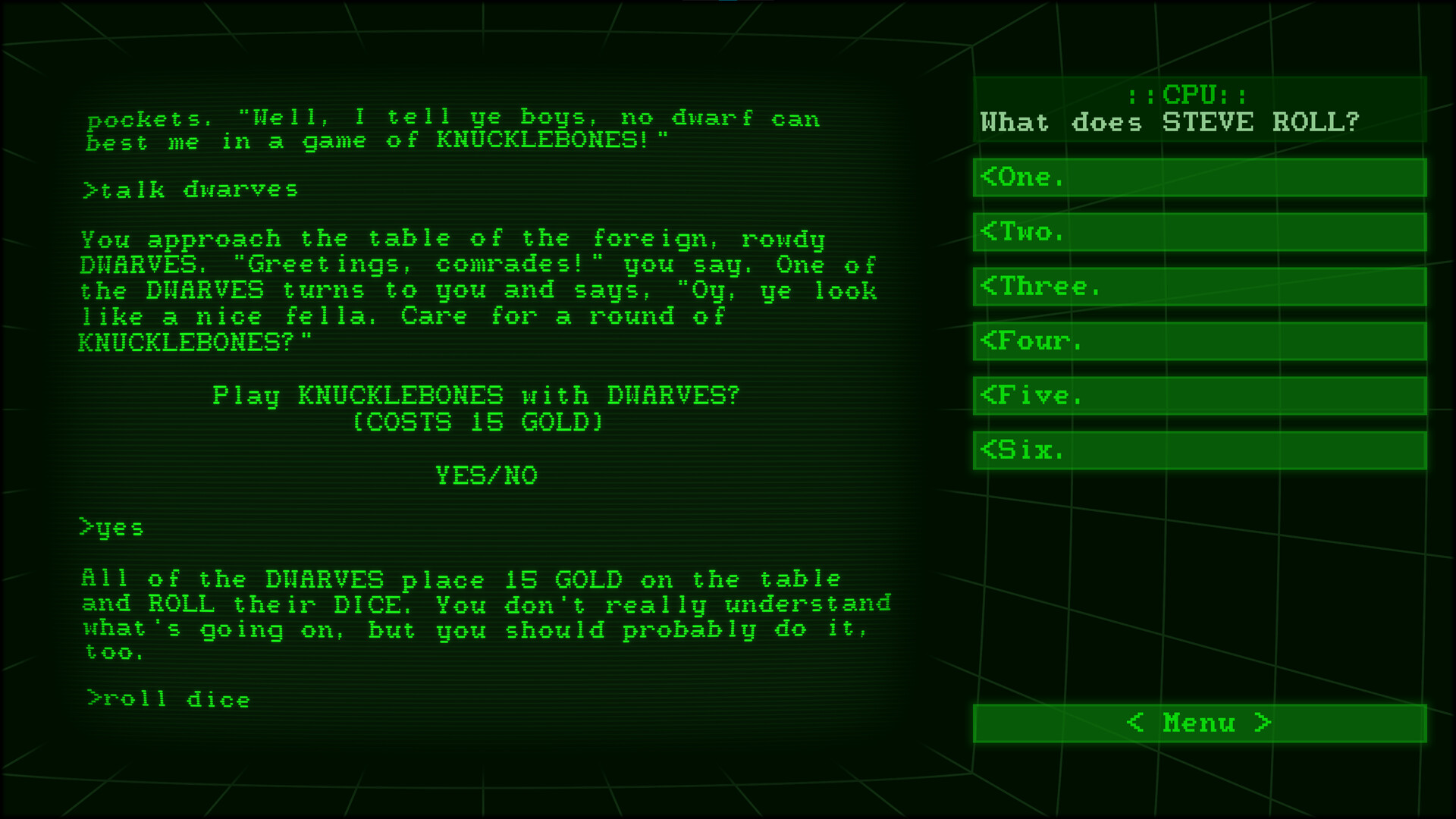
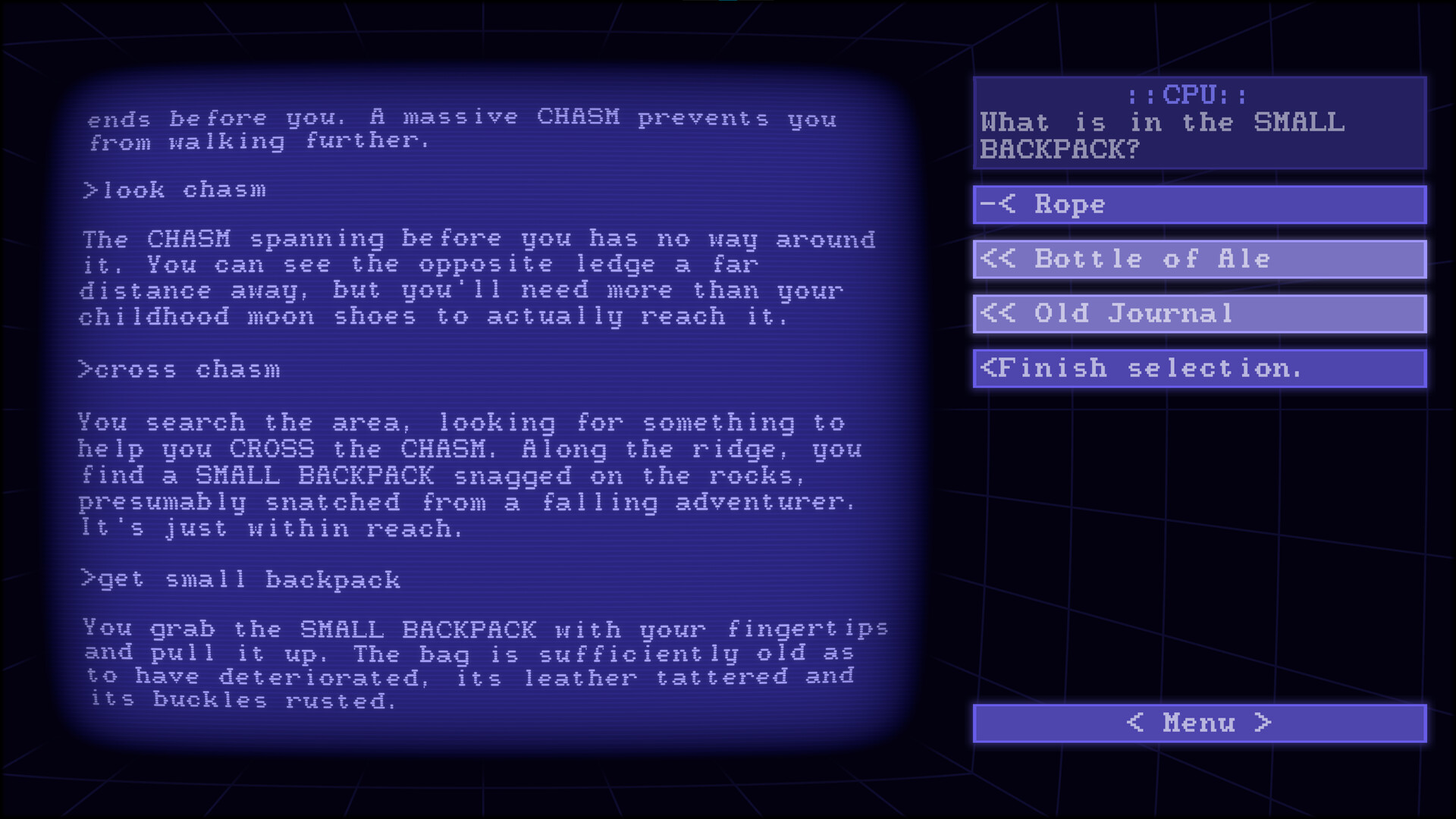
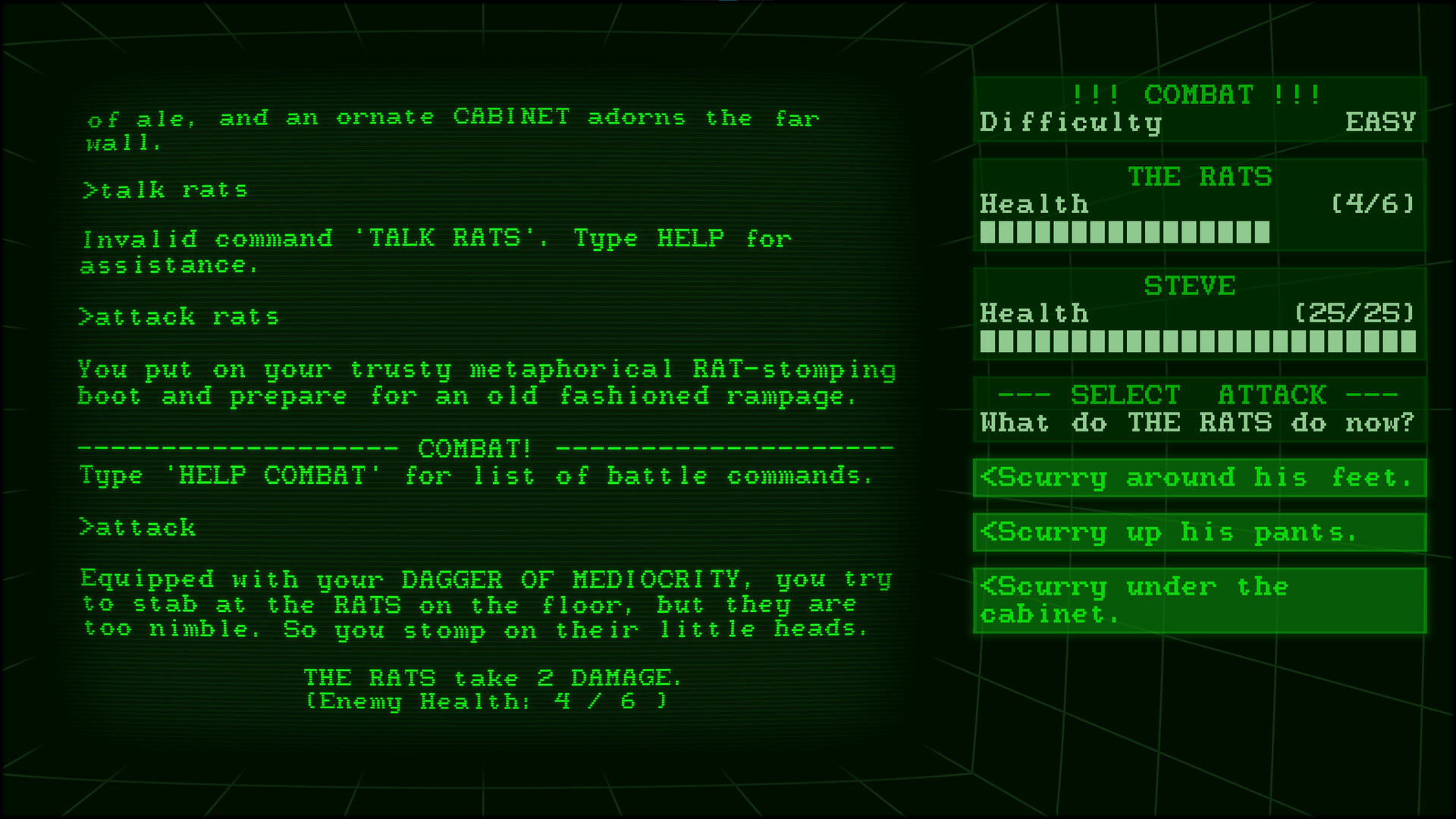
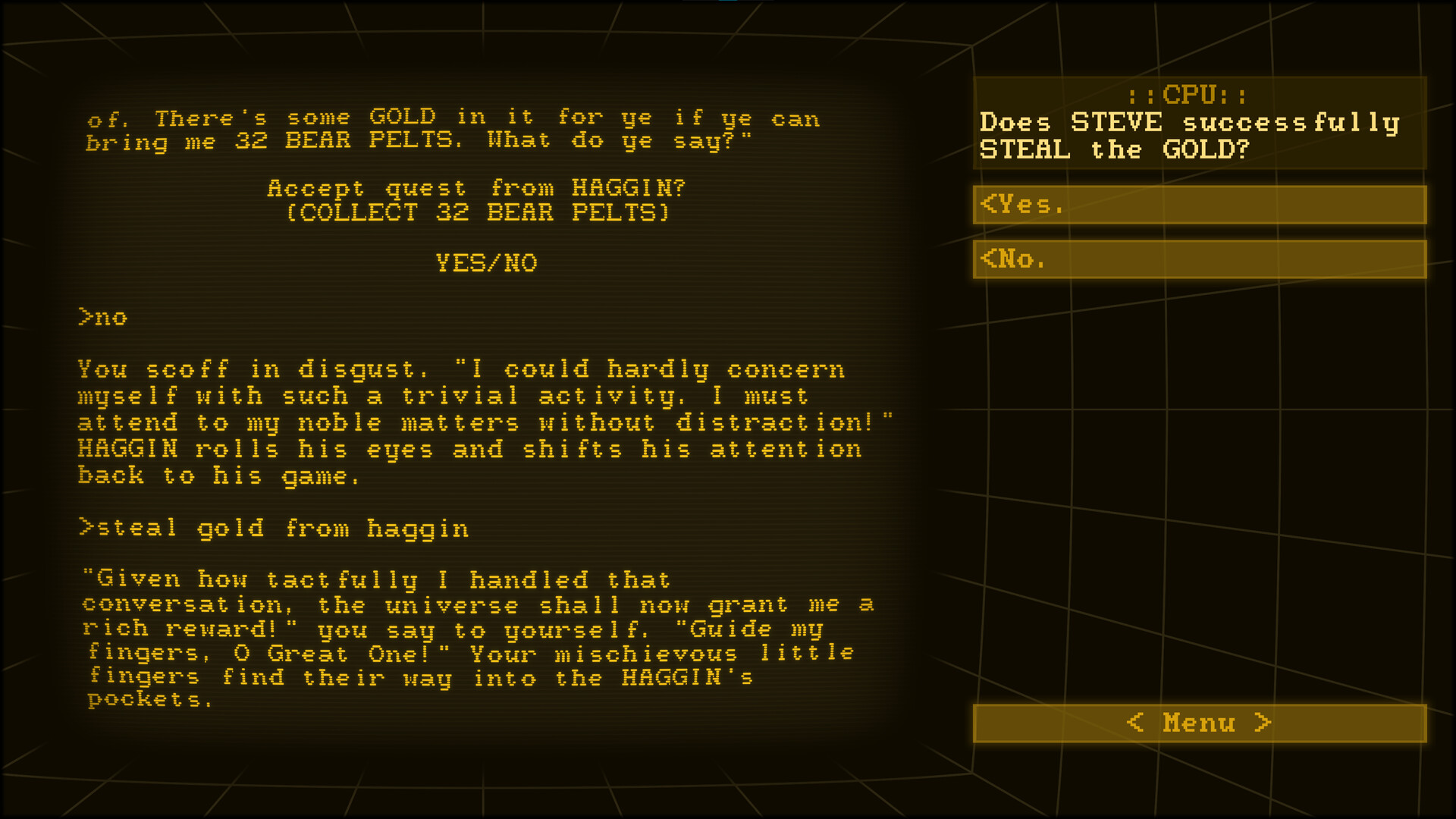
The core loop of Run TavernQuest is gloriously perverse: instead of typing commands you interpret and choose how to respond to STEVE, who actually types. He will try bizarre, desperate, or downright silly commands, and your job is to decide whether to indulge him, gently redirect him, or sabotage him in service of the story. That creates a daily rhythm of short decision moments — pick how an NPC reacts, whether a dice roll succeeds, or whether a corridor contains a chasm or a fork — and watch the narration chew on your choice. The gameplay feels like a long choose-your-own-adventure filtered through a mischievous AI that has opinions, and that tension between authorial control and player-mischief is the main delight. Far from button-mashing, most interactions are about tone: do you play it straight or relish the chaos?
When the System Starts Gossiping
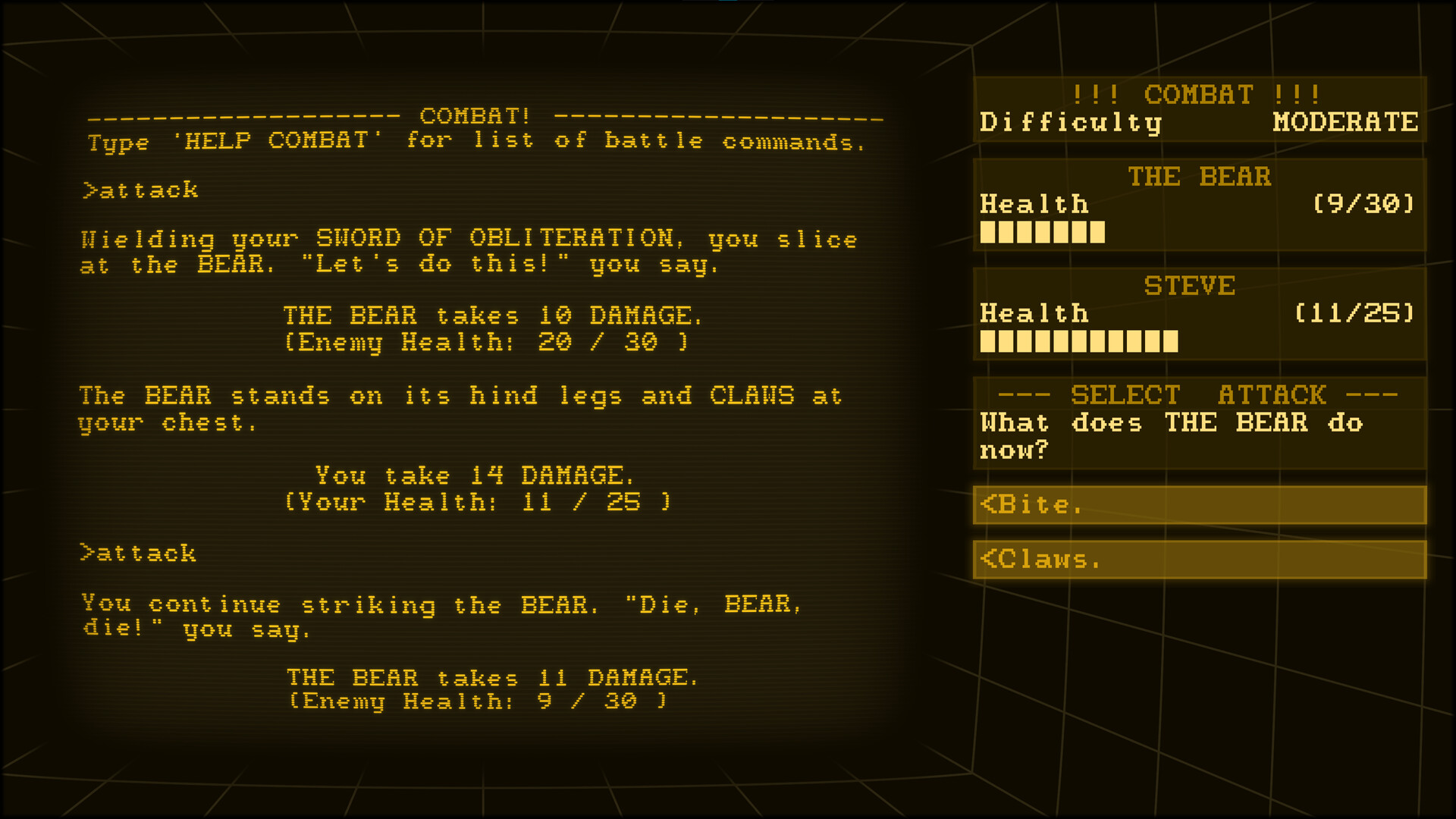
What makes TavernQuest stand out is how the game builds personality into the machine: the narrator (brilliantly performed), the text generator, and the CPU each feel like characters with agendas. They don’t just report; they snark, they pity, they nudge, and sometimes they conspire to mock STEVE’s choices. You get moments where you’re essentially moderating three squabbling voices, and that creates genuinely funny beats — sarcastic commentary in one line, sincere pity in another, and mechanical deadpan elsewhere. There are also deliberate micro-mechanics that flip expectations: you can intentionally lose text-combat to further the joke, or let Steve blunder into weird loot and dead-ends for comedic payoff. This layered control is clever because it makes ‘being the game’ feel heavy with personality, not just a dry menu of options.
A Theatrical Presentation with Small Rough Edges
Technically the game is snug and focused: the voiceover work — especially Jack Dundon’s narration — is a highlight that sells otherwise thin text sections, and the UI extras like font customization and grayscale mode are thoughtful accessibility touches. The visuals are intentionally minimal (text-first) so the performance and writing take center stage; that works for the concept, though it leaves the experience feeling lightweight for players expecting more interactive heft. Performance on Windows (the only platform supported at launch) is solid and I didn’t run into crashes during my playthroughs, but some pacing issues crop up: the second playthrough stretches certain jokes longer than they deserve. Still, the audio timing, read speeds, and the option to speed up or bypass narration make the game more comfortable to grind through if you get impatient.
Run TavernQuest is a fresh, amusing twist on interactive fiction — equal parts prank and affection for the form. It’s best for players who enjoy meta-humor, strong narration, and the novelty of being ‘the game’ rather than the hero. Buy it on Windows if you’re into narrated comedy with some rough edges; consider a sale if you’re wary of pacing or repetitive stretches.
Pros
- Brilliant voice acting and characterful narration
- Inventive role-reversal mechanic — you’re the game, not the player
- Funny, often surprising writing with payoffs late in the story
- Accessibility options like font customization and grayscale mode
Cons
- Pacing problems — the second run overstays some jokes
- Limited platform support at launch (Windows only)
- Sometimes choices feel cosmetic and don’t meaningfully change outcomes
Player Opinion
Players generally praise the voiceover and the clever role-reversal premise — several reviews specifically call the narration pitch-perfect and say the humor lands hard in many spots. Fans compare the tone to games like The Stanley Parable and note a Collin Eddings-esque sense of disciplined madness, which explains why the structural jokes resonate. Criticisms cluster around pacing and value: a common complaint is that the middle or second playthrough gets slow and repetitive, and a handful of players felt the price should be lower or to wait for a sale. A few users reported the CPU tone (the snarky voice) can become grating if you dislike constant commentary. If you enjoy meta-humor, clever writing, and narrated text adventures, you’ll likely get a lot out of it; if you hate repetitive jokes or long monologues, prepare for patience-testing stretches.