





Mr. President Review – A Deep, Messy, Addictive Presidency Simulation
A faithful digital adaptation of GMT's complex boardgame that makes the Oval Office manageable on PC — brilliant for fans, messy for newcomers. Early Access with promise, bugs and debates included.
I booted up Mr. President expecting a dense boardgame translation and what I got was exactly that: a two-decade presidency simulator that demands attention, patience and strategic thinking. Exia Labs' adaptation brings GMT Games’ sprawling 2000–2020 sandbox to Windows with all its crises, cabinet headaches and legislative chess. It’s enthralling when it clicks, maddening when the UI or missing features get in the way — but it already nails the feeling of having too many fires to put out. If you like simulation, political strategy or just painstaking decision-making, this Early Access is worth poking at.
Governing by Action Economy
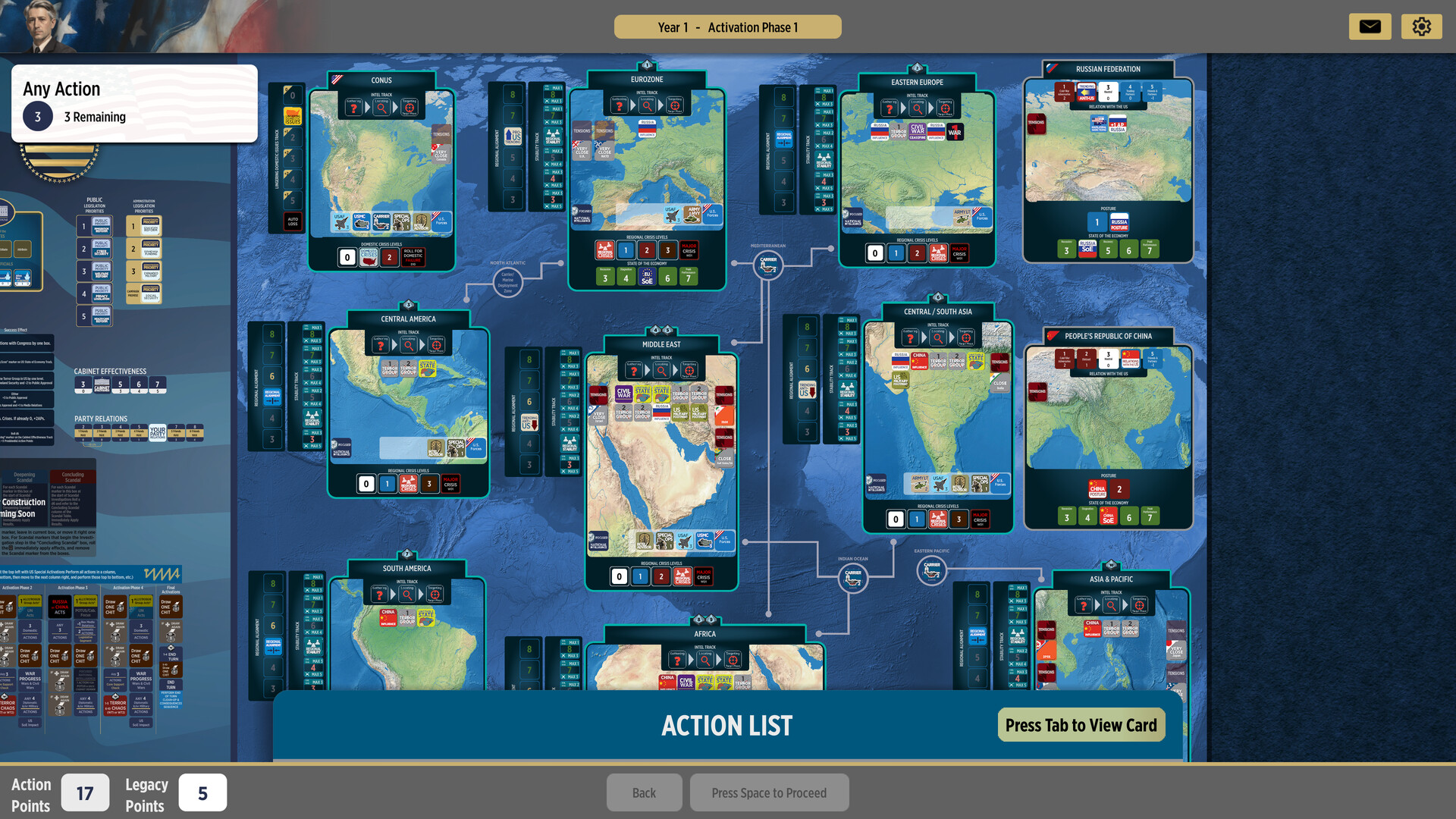
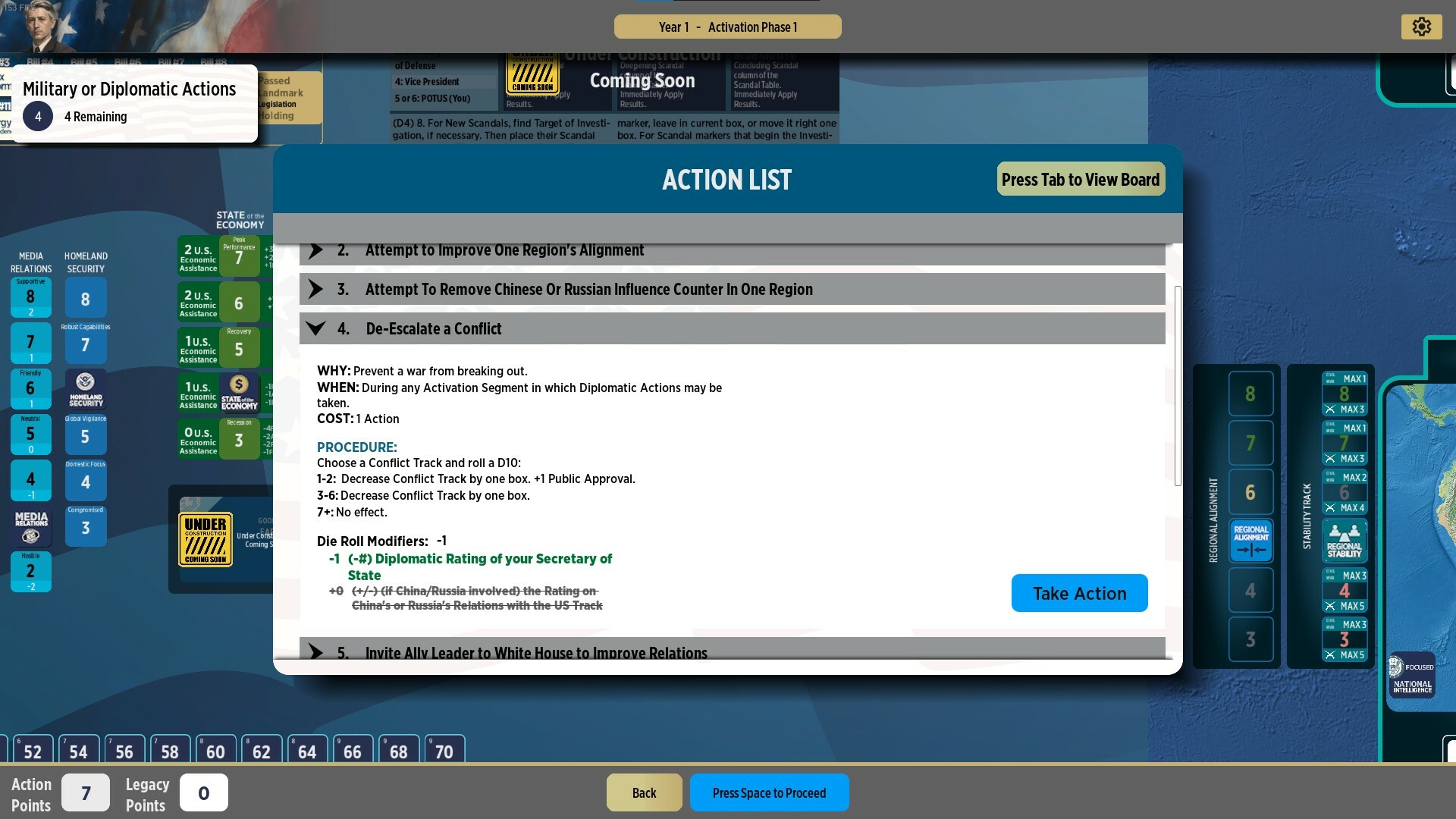
The core loop of Mr. President is ruthlessly elegant: every turn you pick actions from lists, weigh limited action budgets and watch how domestic politics and foreign crises cascade. You’ll spend most of your time shuffling between your Cabinet, the map (regions and hotspots), and the daily crisis pop-ups, deciding whether to spend political capital on a reform, a military move, or damage control. It simulates the drip-feed of information presidential aides hand you — a headline here, an intel report there — and forces you to triage. Voting with Congress, confirming a Supreme Court justice, or sending aid to a region all feel significant because the game ties outcomes into long, branching consequences. The physical boardgame’s heavy bookkeeping is handled by the software, which speeds play but still leaves the hard choices on your plate.
When History and Counterfactuals Collide
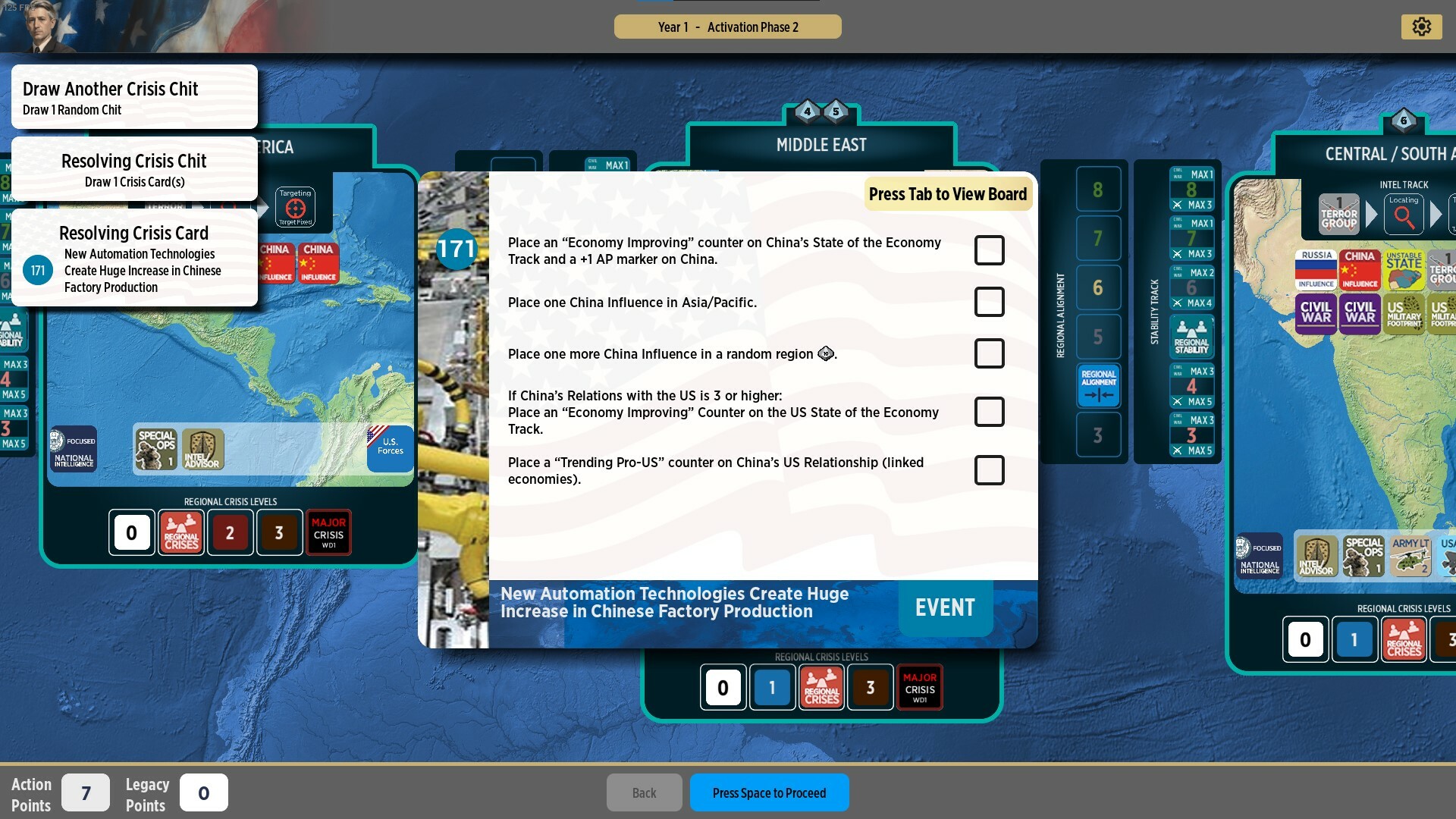
What sets this adaptation apart is how it balances historical scenarios with plausible "what ifs": the five scenario slots (one per term) include the real events but also alternate crises that meaningfully shift strategy. Over 150 crisis cards — historical and counterfactual — create replayability: you can be burned by a sudden oil shock in one run and face a cartel-turned-rogue-state in another. Actions aren’t cookie-cutter; allies and adversaries have different agendas, which prevents the game from feeling like a generic world map simulator. The cabinet-building element matters: pick diplomats, strategists and activists who amplify or blunt certain strategies, and learn to live with imperfect teams. RNG is present and will bite you sometimes, but the game rewards planning and prioritization over dice worship.
A Functional, Occasionally Frustrating Presentation
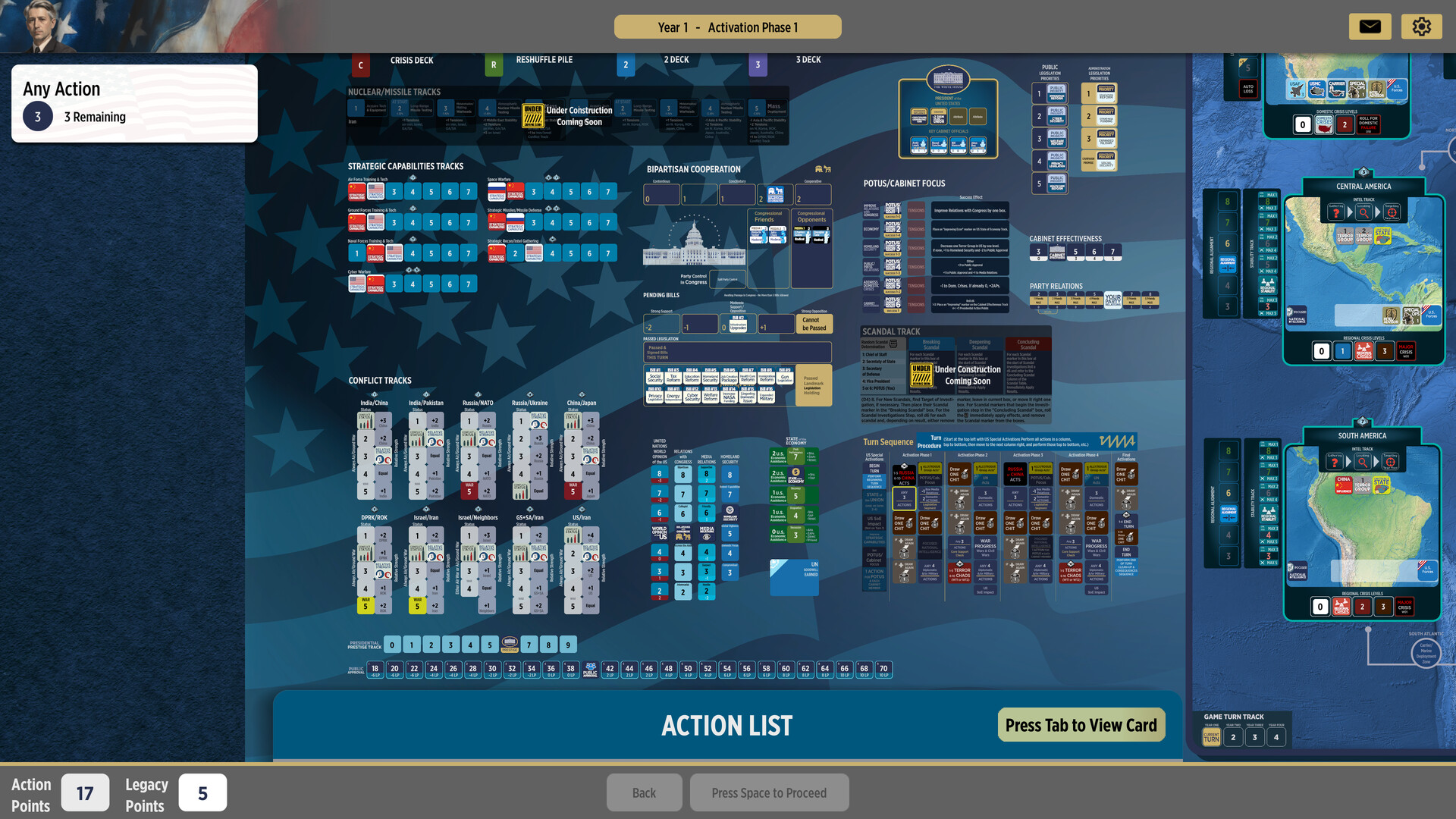
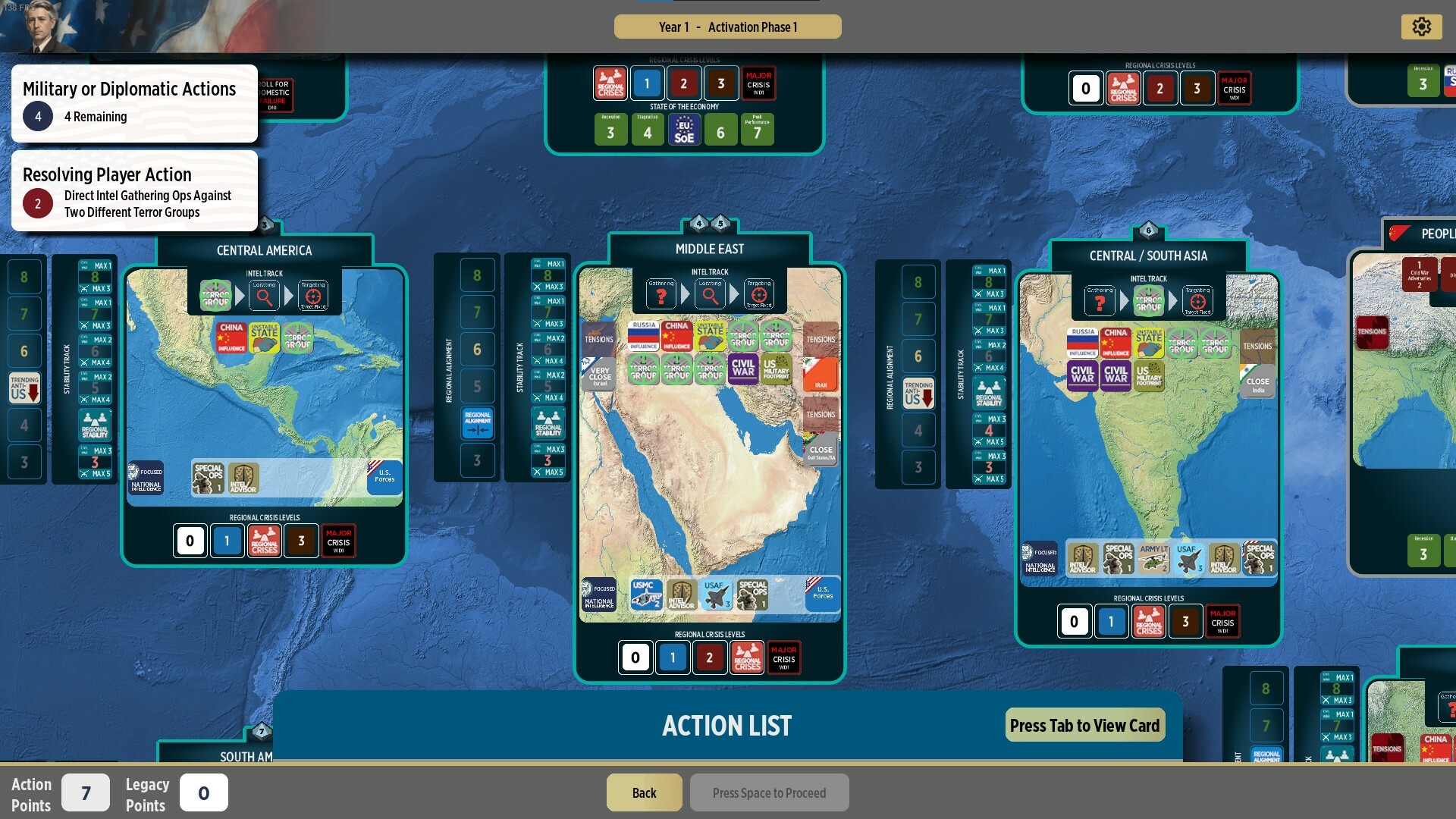
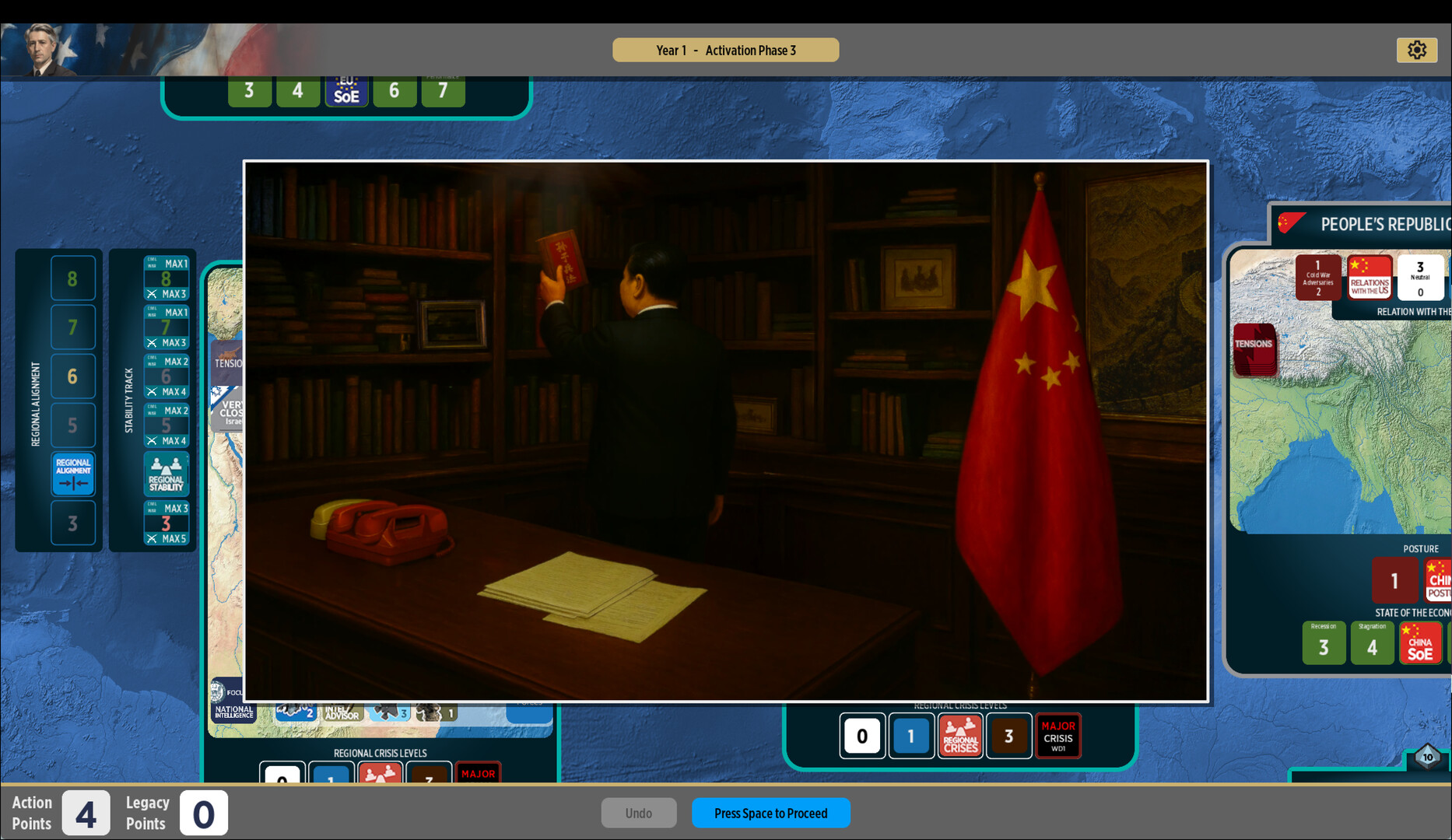
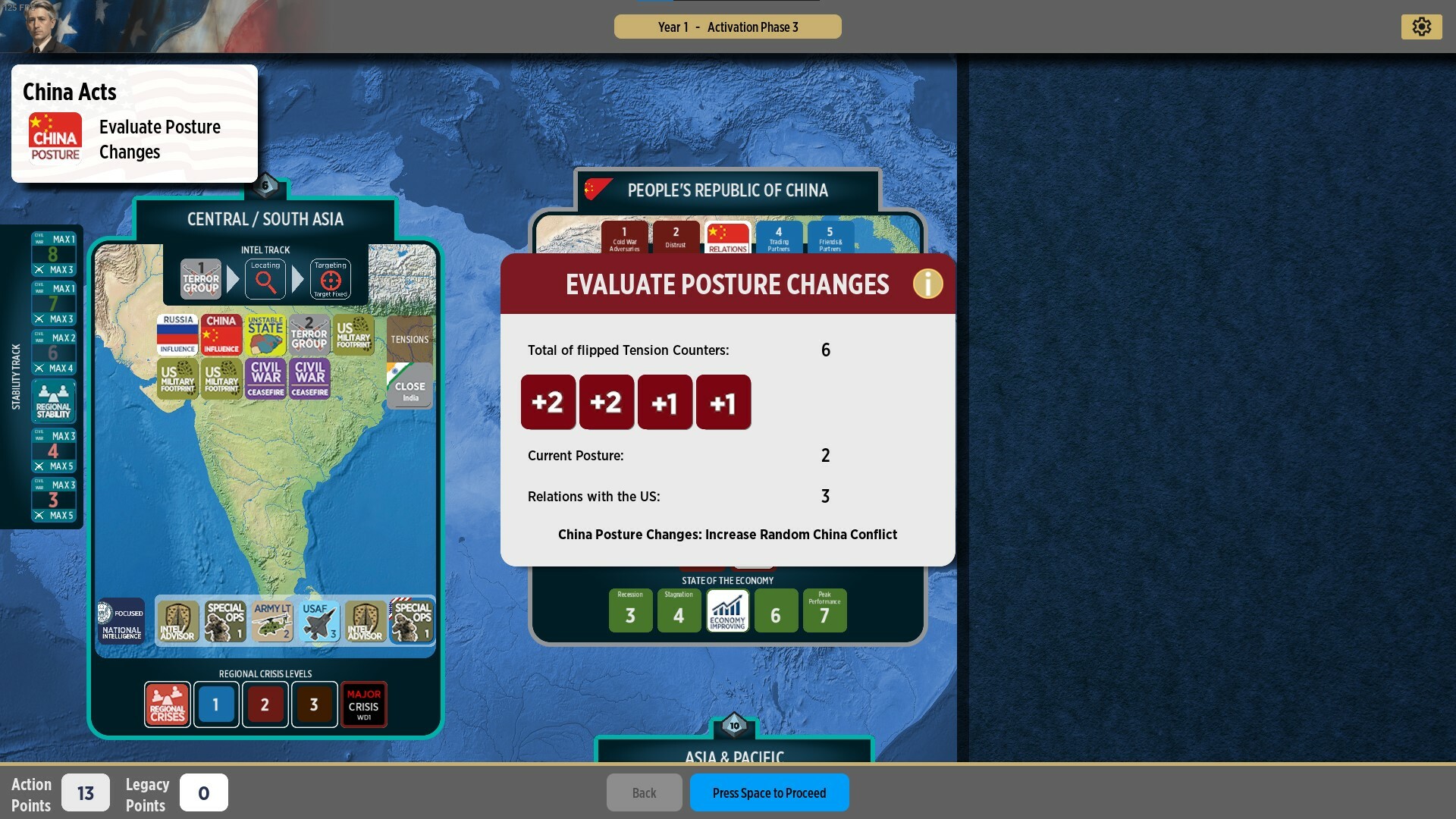
Graphically, Mr. President keeps things utilitarian — clean maps, readable icons and a lot of UI panels that feel built for efficiency rather than flair. Mouseover tooltips and pop-up rules are genuinely useful and are one of the best parts for newcomers trying to learn the boardgame logic. Performance on Windows has been fine on my rig, though some reviewers report background lag; Mac/Linux aren’t supported at launch. The game uses automated processes to reduce turn-time, which is great, but the UX can feel clunky in places: repeated clicks, unclear feedback on some long-term tracks, and a few actions that didn’t move their intended meters during my Early Access sessions. Audio is minimal; there’s no voice acting, just ambient cues and interface sounds, which keeps focus on strategy but makes the game feel less cinematic. Overall it’s readable and usable, and once you learn where the important panels hide, the flow becomes satisfyingly surgical — when nothing is bugged.
Mr. President is already the best digital home for this particular beast of a boardgame: faithful, detailed and genuinely absorbing when systems work together. Expect Early Access warts — bugs, missing pieces and an occasionally awkward UI — but also a lot of promise for anyone who loves political simulation or heavy strategy. Buy it if you’re a boardgamer or a patient strategist; casual players should wait for more polish.
Pros
- Faithful adaptation of a deep, strategic boardgame
- Tooltips and automated bookkeeping speed up play
- High replayability with historical and counterfactual crises
- Makes complex presidential simulation approachable on PC
Cons
- Early Access bugs and missing features can block immersion
- UI can feel clunky and some feedback is unclear
- Controversy around asset generation and developer background
Player Opinion
Players who own the GMT boardgame often praise the digital version for taking the heavy lifting out of setup and bookkeeping, and many say the UI tooltips make learning the systems far less brutal. Several long-term fans called it a "gem" in Early Access and appreciate the faithful scenarios and deep replayability. Criticisms cluster around unfinished mechanics (missing allied/rogue actions, some crisis tracks not functioning) and buggy interactions where successful actions didn’t always move the correct meters. A number of users also pointed out worries about Exia Labs’ use of AI in art and the company’s non-traditional background, which has sparked debate about ethics and trust. If you like complex simulation and don’t mind Early Access rough edges, reviewers generally say it’s worth trying; casual players may feel overwhelmed or bored.