



High On Life 2 Review – Skate, Shoot and Survive the Sequel's Technical Woes
Squanch Games returns with a loud, absurd FPS sequel that improves combat and traversal but launches with notable crashes and stutters on many PCs. If you love weird humor and skate-through-combat, there's a lot to enjoy — just be aware of the current optimization issues.
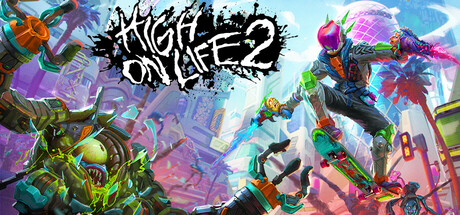
I came into High On Life 2 with low expectations and high hopes: low expectations for technical polish at launch, and high hopes for the manic voice-driven comedy and weapon personalities that made the first game memorable. The sequel doubles down on the absurd — skateboard traversal, sharper gunplay, and a story that actually surprises in a few spots — and still manages to feel like Squanch Games' tradition of weird, smart goofiness. What complicates things is that the launch build is littered with performance quirks on a wide range of hardware, which often turns belly laughs into frustration mid-mission. If you can tolerate a couple of rough edges (or wait for hotfixes), there’s a very good game hiding underneath the stutters.
Skate-to-Slay: Movement That Actually Feels Fun
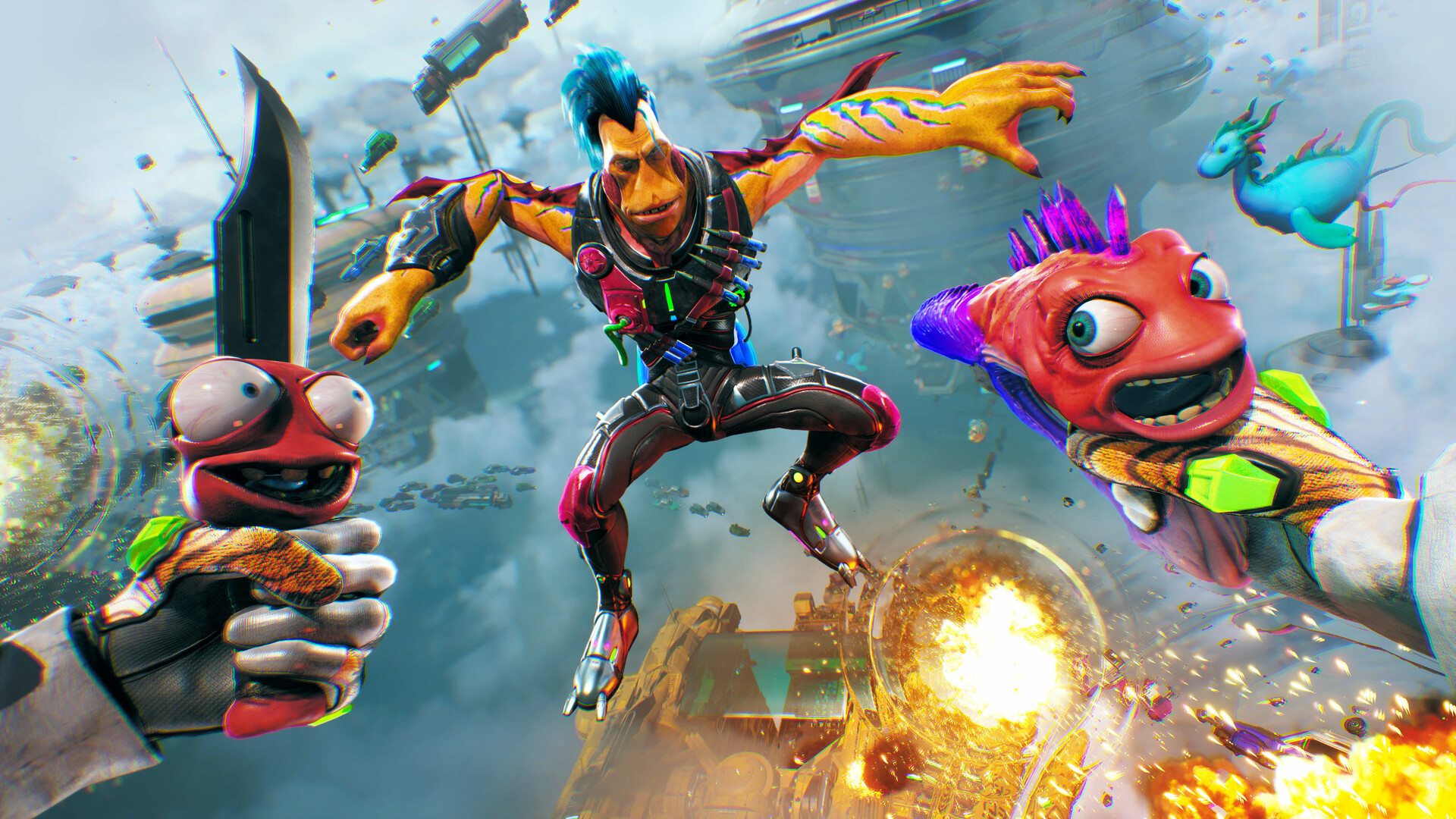
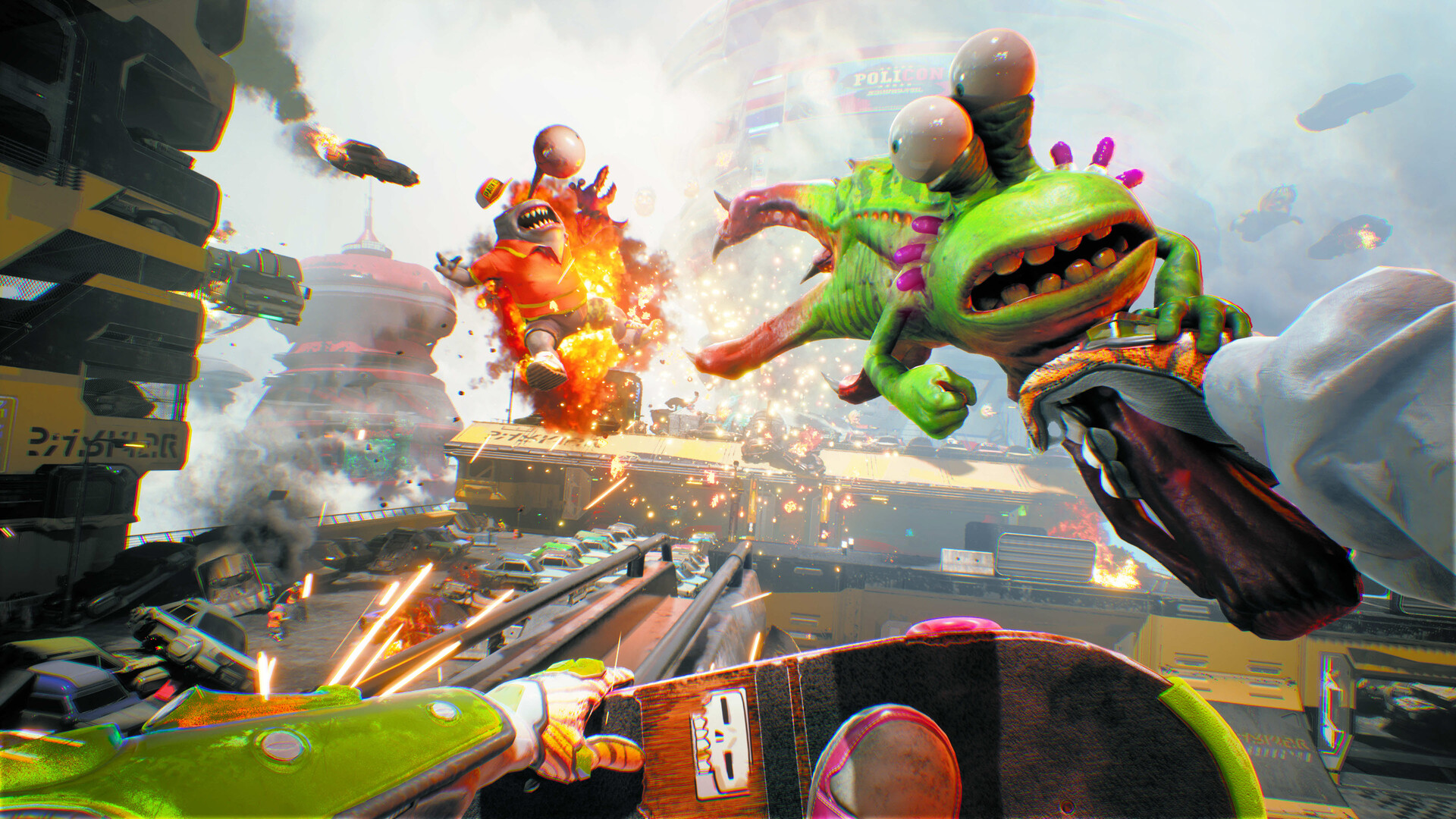
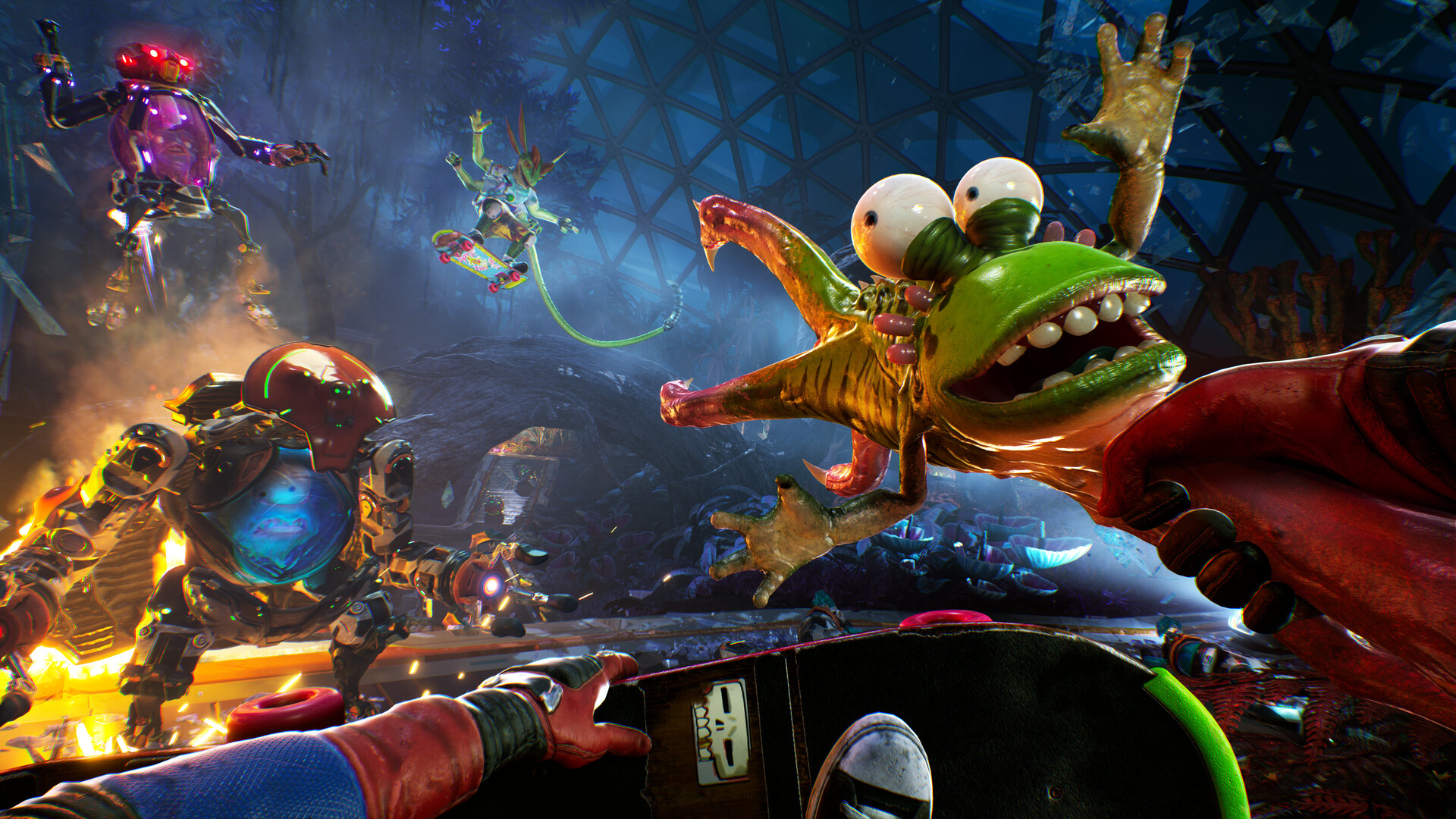
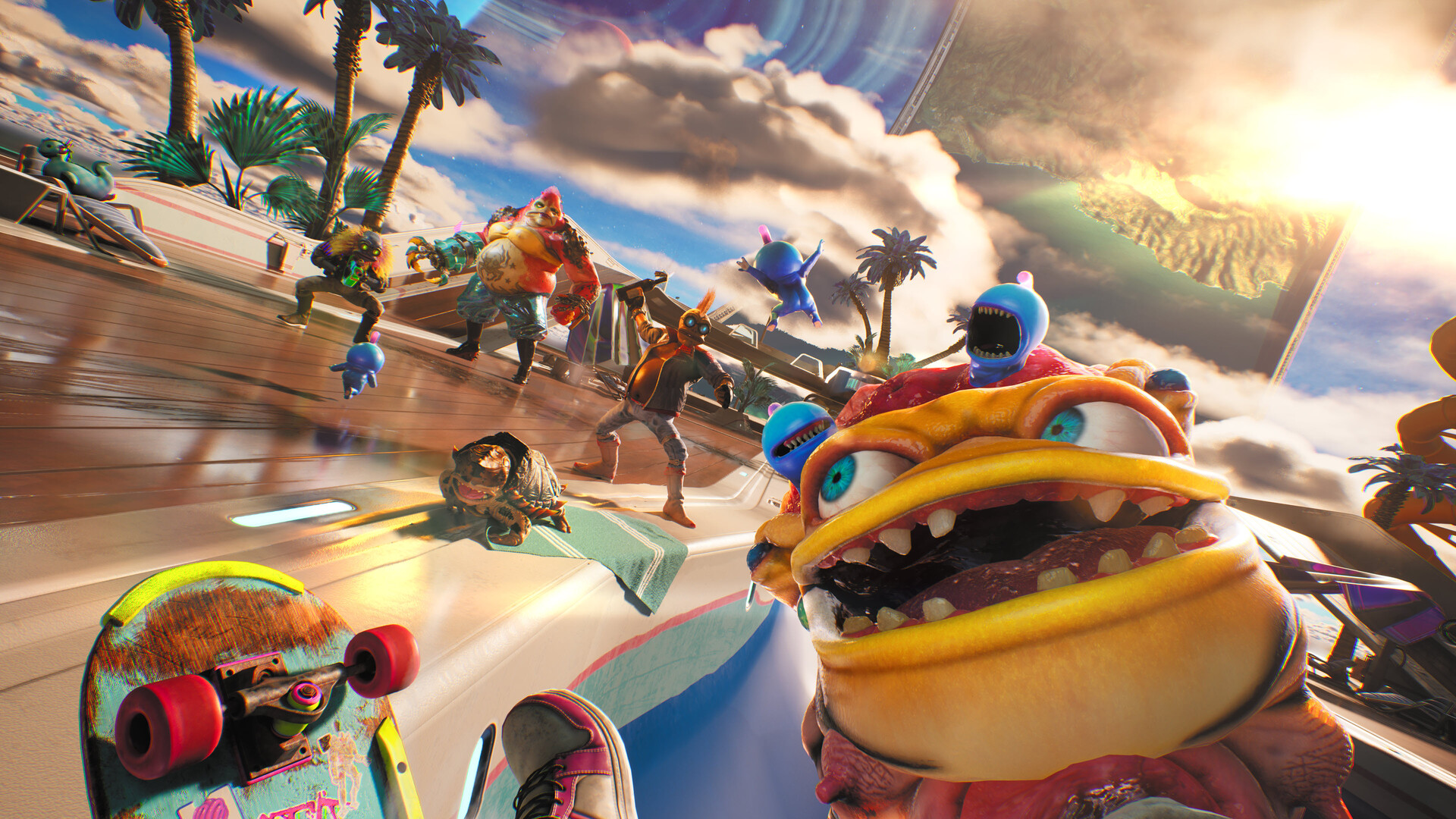
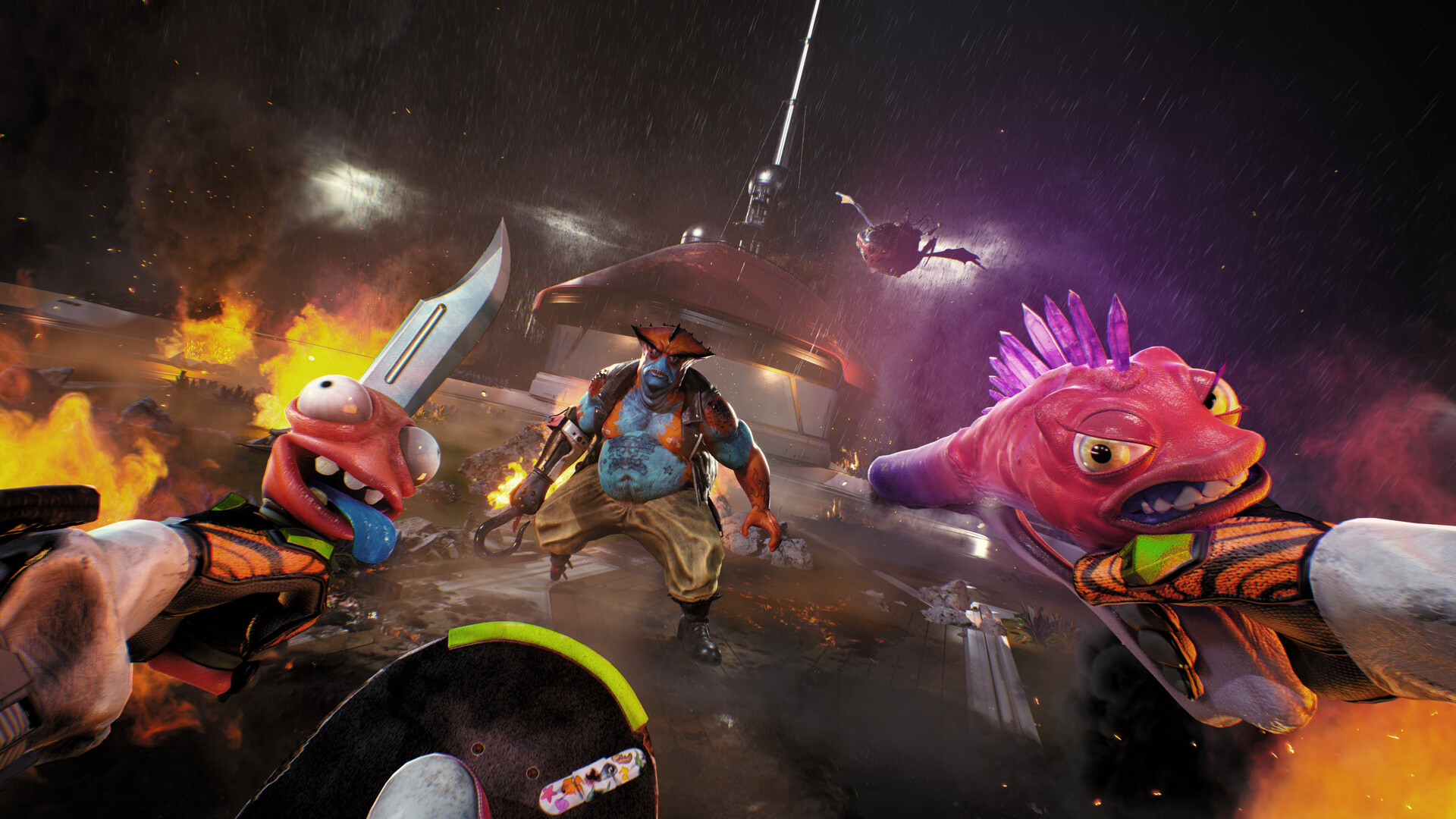
High On Life 2 centers around a frantic first-person rhythm of shooting, slashing and skating, and the skateboard addition genuinely changes how you approach levels, giving traversal a momentum-driven flow that blends speedrunning lines with combat improvisation. I spent more time than I should admittingly grinding rails and bashing extraterrestrial cops with the deck because the controls are snappy, the jumps feel weighty enough and the level design consistently rewards creative movement. Combat has tightened up since the first game: weapons feel punchier, aim feedback is clearer, and enemy variety forces you to swap tactics rather than rely on one trick. There’s still a heavy focus on scripted, gag-driven encounters that reward timing and improvisation, which made me laugh out loud multiple times while also occasionally facepalming at the absurdity. Boss fights lean into bizarre design and comedy beats, which kept pacing varied between zippy arena scraps and more exploratory segments. Overall, the core loop of skate, shoot, explore remained oddly addictive even when performance hiccups tried to derail it.
When Weapons Have Feelings (And You’ll Talk Back)
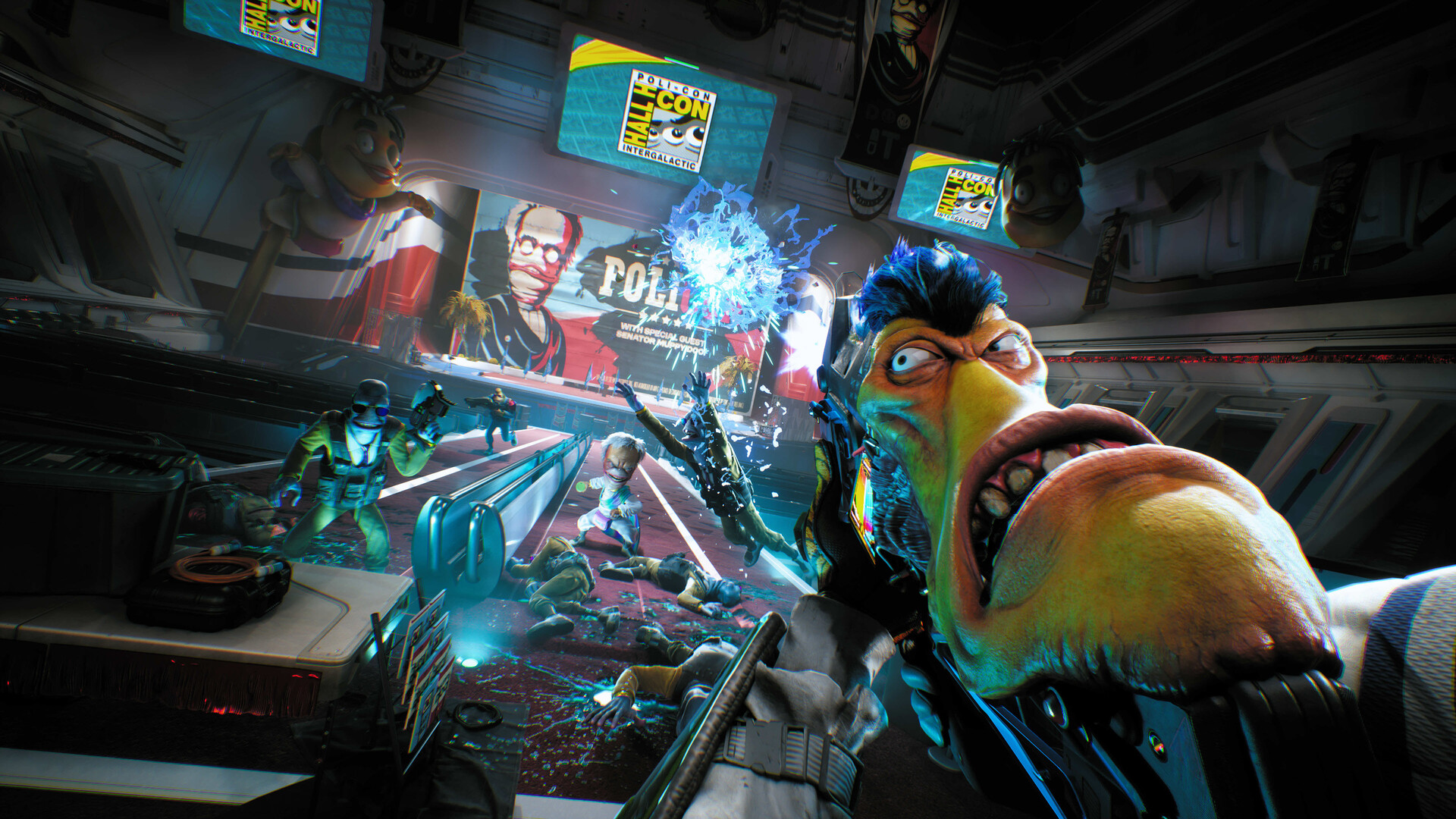
What sets this sequel apart is how it expands the personality of the arsenal and the rag-tag crew, and how traversal is married to comedy in service of gameplay rather than just jokes. The alien guns once again have attitudes — and Squanch doubles down: they complain, flirt, and insult your tactics while still being mechanically useful, which made me attach to loadouts in a way I didn’t expect. New additions like nimble Gatlian companions and more interactive environmental gags make exploration less of a checklist and more of a playground for emergent comedic moments. The skateboarding and obstacle-heavy courses create mini-game set pieces that often feel like Ghostrunner-lite sprinting sections with gunplay layered on top, and I loved the variety that opened up for speed-based combat. There’s also an emphasis on pacing through set pieces such as a sprawling convention, a human zoo, and a luxury cruiser — each area has distinct verticality and traversal hooks that encourage experimentation. If you liked the first game's vibe, this sequel feels like a confident expansion rather than a re-skin.
Neon, Noise and Unreal: Presentation and Performance Realities
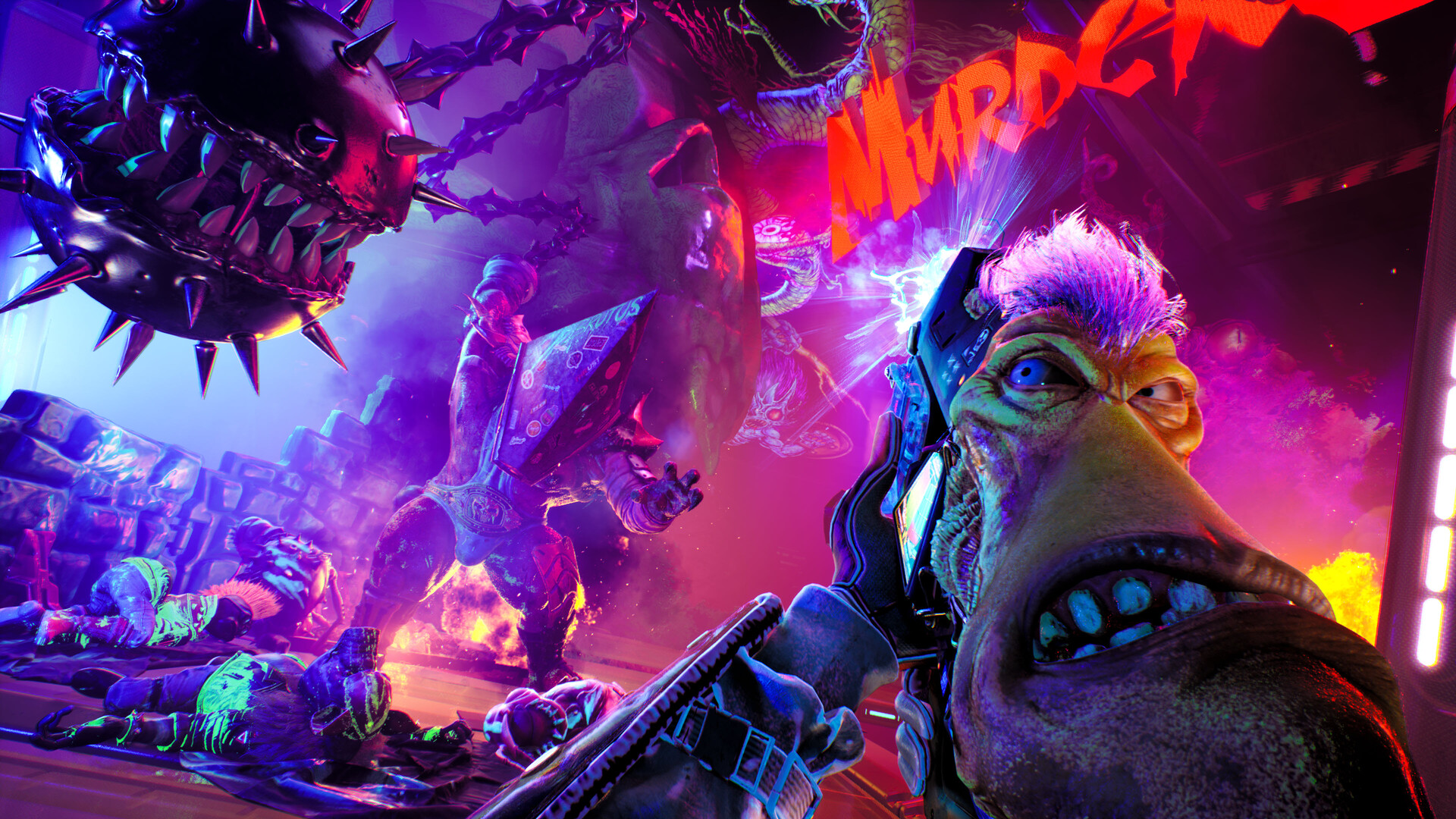
Visually, High On Life 2 is a feast: colorful alien palettes, polished character animation, and a voice cast that sells almost every line make the world pop, and the soundtrack supports the manic tone with punchy beats. The game clearly benefits from Unreal Engine's visual toolset — the particle effects and lighting sell the chaos — but that same engine also exposes some rough edges: shader loads and micro-stutters are common on many setups, and I saw frequent frame drops and occasional crashes in longer sessions. Audio and writing do a lot of heavy lifting when the visuals hiccup; the cast keeps momentum through moments where the frame rate doesn't. Accessibility options are basic but present, and settings like Nvidia Reflex/Frame Generation can dramatically affect smoothness if your GPU supports them. On Windows the game runs well on high-end rigs with the right tweaks, but mid-range players should probably wait a few updates for polished performance.
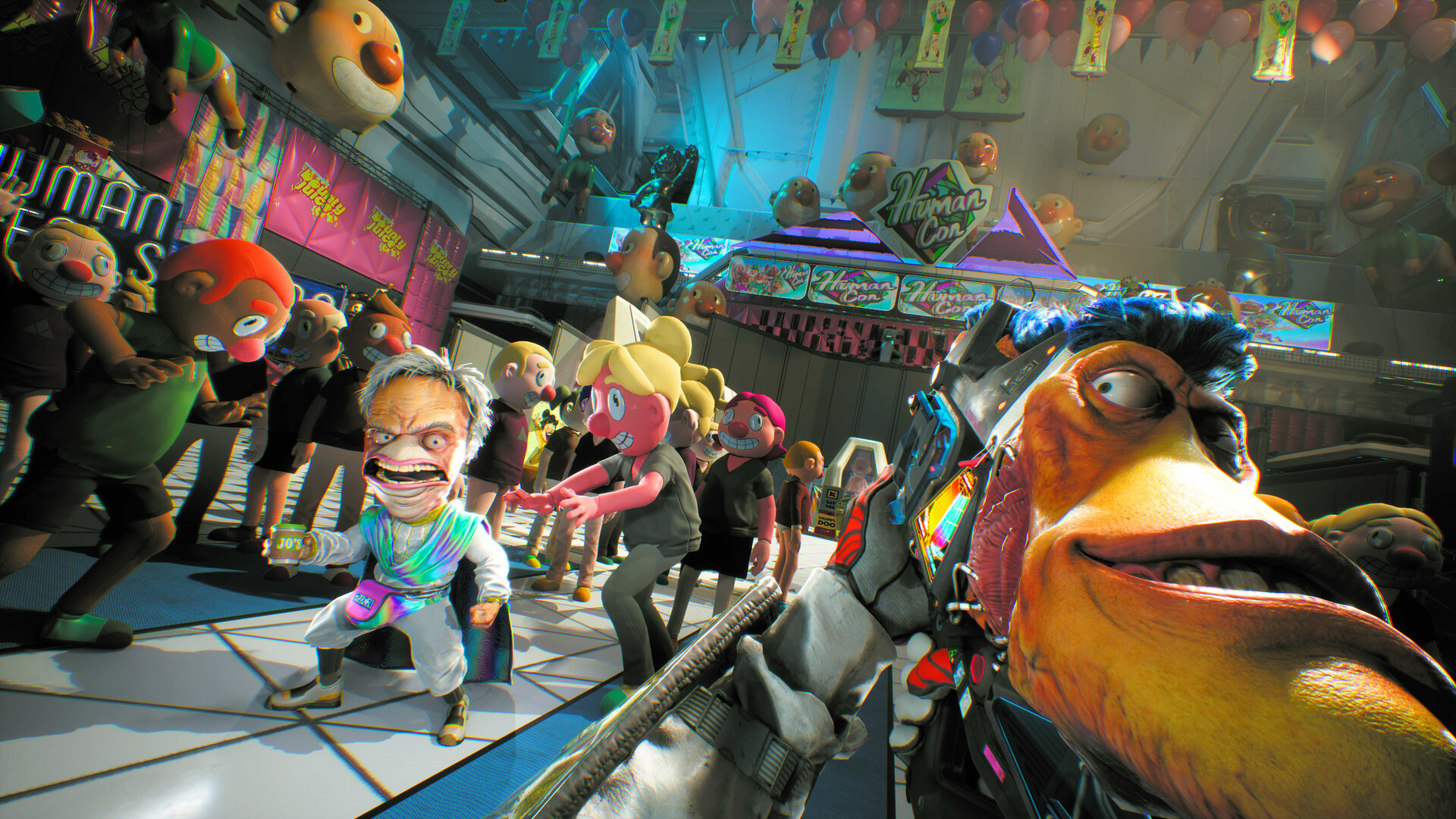
High On Life 2 is loud, weird and often brilliant: its improved combat and skateboard-driven traversal make for some of the most fun I’ve had in an FPS campaign in recent years. However, the launch build’s optimization problems are serious enough to temper enthusiasm for many players, so my recommendation is a conditional buy — great for those on powerful PCs or patients who can wait for patches, less so for players on mid-range rigs right now. Keep an eye on updates; the core game is worth the attention.

Pros
- Inventive, personality-packed weapons and comedy that often lands.
- Skateboarding traversal adds a genuine new layer to FPS movement.
- Polished world design and strong voice performances keep you invested.
- Combat feels tighter and more varied than the first game.
Cons
- Significant optimization and crash issues on many PCs at launch.
- Some bugs and softlocks reported that can interrupt progress.
- Humor can feel uneven without the first game's original voice presence.
Player Opinion
Players are split but the trend is clear: folks who get past the technical gremlins tend to praise the writing, the new skateboard traversal, and the beefed-up gunplay — many call it a worthy sequel that expands on the original’s strengths. Conversely, a loud portion of reviews complain about frequent frame drops, shader stutters, and crashes that make the game unplayable for some mid-range configurations; several users recommend enabling Nvidia Reflex or frame generation to smooth things out if supported. Recurrent tips include waiting a couple of weeks for hotfixes if you aren’t on a high-end rig, and many longtime fans still find the humor and pace rewarding enough to stick with it. If you loved the first game’s tone, you’ll likely enjoy this one once performance is stable; if you’re sensitive to crashes, consider holding off.