




Dead in Antares Review – Tight Survival, Tactical Heart
A crunchy turn-based survival-management RPG from Ishtar Games. I led ten specialists across a hostile alien world—resource micromanagement, deep relationships and tactical combat combine into a polished, occasionally brutal experience.
Dead in Antares drops you on a gorgeous but dangerous alien planet and hands you ten fragile humans to shepherd back to something resembling hope. If you loved Dead in Vinland, this feels like its smarter, more disciplined sibling: same addictive loop of exploration, resource juggling and character drama, but with fewer annoyances and more clarity. What hooked me immediately was the balance between micro-management and meaningful choices—every assignment, every conversation, every broken generator matters. It’s a game that rewards planning and punishes complacency, often with wry humor and a few teeth-gritting moments.

Racing the Clock and the Planet
The core of Dead in Antares is an exercise in prioritization: assign your ten specialists to work stations, explore the regions around your crash site, or patch up wounds and systems before fatigue and hunger spiral out of control. Days progress in tidy turns and every action eats into your limited pool of food, water and energy. I spent hours balancing who goes scouting (for loot and story beats), who stays at the camp to craft and repair, and who I let bicker because their relationship needed a push. Exploration rewards curiosity but also demands preparation: environmental hazards, faction encounters, and tactical skirmishes can erase a week of careful planning in one bad move.
When Crew Chemistry Becomes Strategy
What lifts Antares beyond generic base-builders is how relationships and individual traits feed the system. Ten playable characters, each with distinct pasts and quirks, produce over a hundred relationship dialogues and tangible bonuses when paired well. I found myself deliberately arranging pairings not because the UI told me to, but because watching two characters evolve from distrust to begrudging respect is mechanically useful and narratively satisfying. Leveling now gives you both passive and combat options at once, and the new Power Surge ultimate system creates dramatic clutch moments in fights. Transparency improvements (clear build progress, visible exploration rewards, and reduced petty RNG) make strategic planning feel fairer, not just luckier.
Art, Sound and the Machine Under the Hood
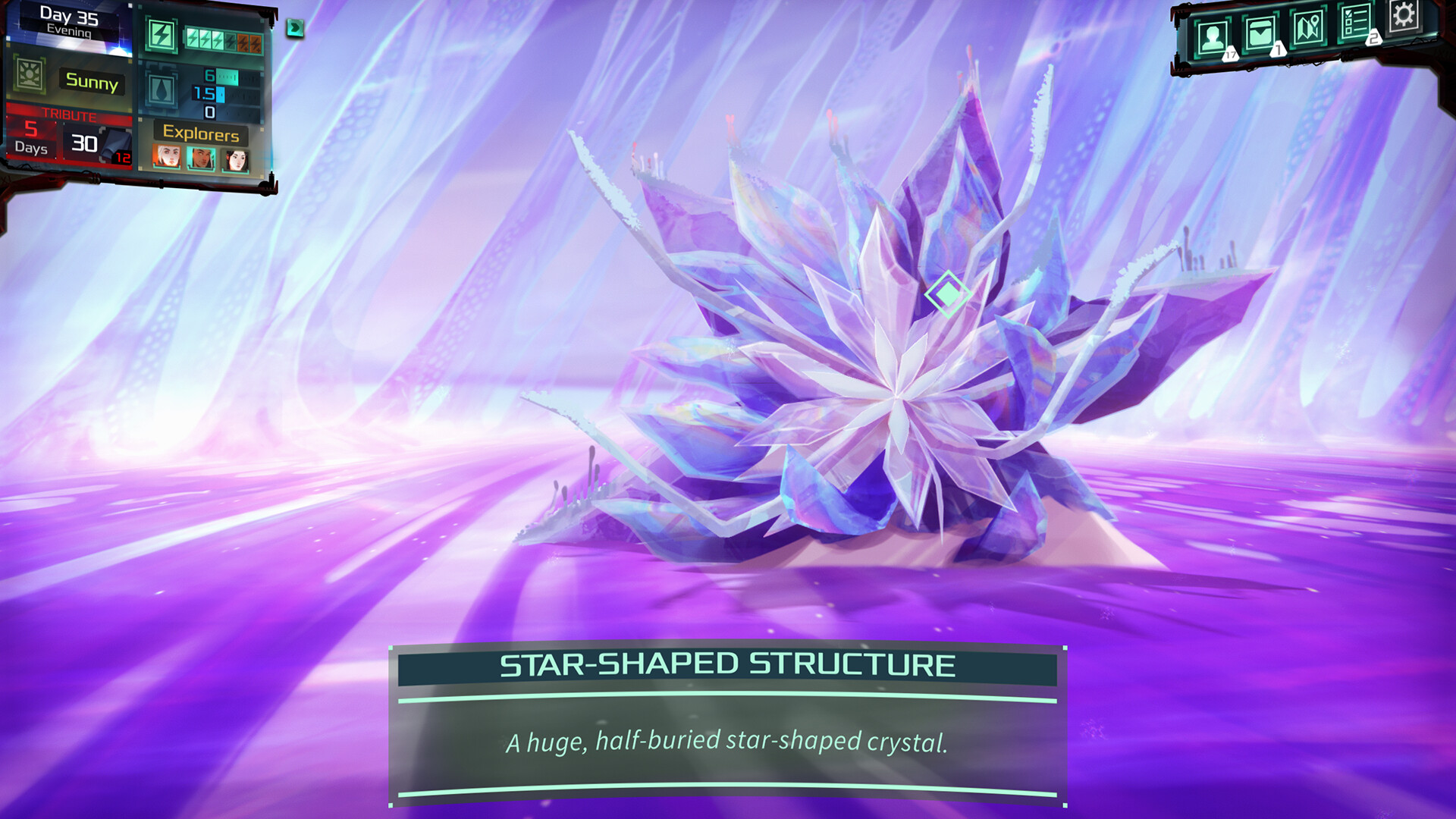
Graphically, Antares is a hand-drawn love letter: the biomes—glimmering crystal groves, volcanic sands, lush alien jungles—have personality and readable detail. The soundtrack is subtle, leaning atmospheric so the management chatter never gets drowned out. Technically, the Windows build runs smoothly during my playthrough; performance is solid even when dozens of timers and effects tick at once. Accessibility-wise, there are multiple difficulty levels (and a hardcore "True Captain" mode), though some players miss custom sliders. Controls are mostly intuitive, with a few clunky menus early on, but the improved feedback and clearer values quickly reduce frustration.

Dead in Antares is a thoughtful evolution of the series: tighter systems, better clarity and relationships that actually change how you play. If you enjoy survival-management with tactical combat and strong character moments, this is worth your time—especially on Windows where it runs best. Newcomers should expect a learning curve, but fans of the series will likely feel rewarded rather than pestered.




Pros
- Deep, interconnected survival systems with meaningful choices
- Rich character relationships that matter mechanically and narratively
- Great hand-drawn art and an atmospheric soundtrack
- Less punishing RNG and improved transparency compared to predecessors
Cons
- No per-parameter custom difficulty sliders (some players wanted them)
- A few clunky menus and awkward scientific jargon early on
- Character portraits can feel stylistically similar (personal taste)
Player Opinion
Players repeatedly praise how Antares keeps the Dead In spirit while fixing many long-time annoyances: less RNG in small outcomes, clearer progress bars, improved leveling choices and fleshed-out relationships. Several veteran reviewers noted that combat now offers guaranteed hits and a charged Power Surge ultimate, which reduces frustration and creates memorable clutch plays. Critics commonly mention the lack of custom difficulty sliders and a slightly clunky UI early on, while newcomers say the recommended difficulty is forgiving enough to learn systems without immediate punishment. Overall, community sentiment skews positive—fans of Dead in Vinland consider it an upgrade, and new players find the polish and transparency welcoming.