






Airborne Empire Review – Flyable Cities, Pirates and Plenty of Charm
Build a unique flying city, juggle lift, balance and propulsion, and fend off sky pirates in a charming open‑world city‑builder with a surprising tactical bite.
I went into Airborne Empire with nostalgic expectations after Airborne Kingdom, and I left grinning like a mad engineer piloting a zeppelin. The core hook—building a living, moving city that has to stay aloft—remains wonderfully unusual, but this sequel layers in combat, quirky birdfolk, and bigger open biomes. If you like your city builders with a dash of exploration and the occasional pirate cannon in your face, this one will grab you. It’s cozy most of the time and hectic when pirates crash the party, and that tonal mix is exactly what kept me coming back.
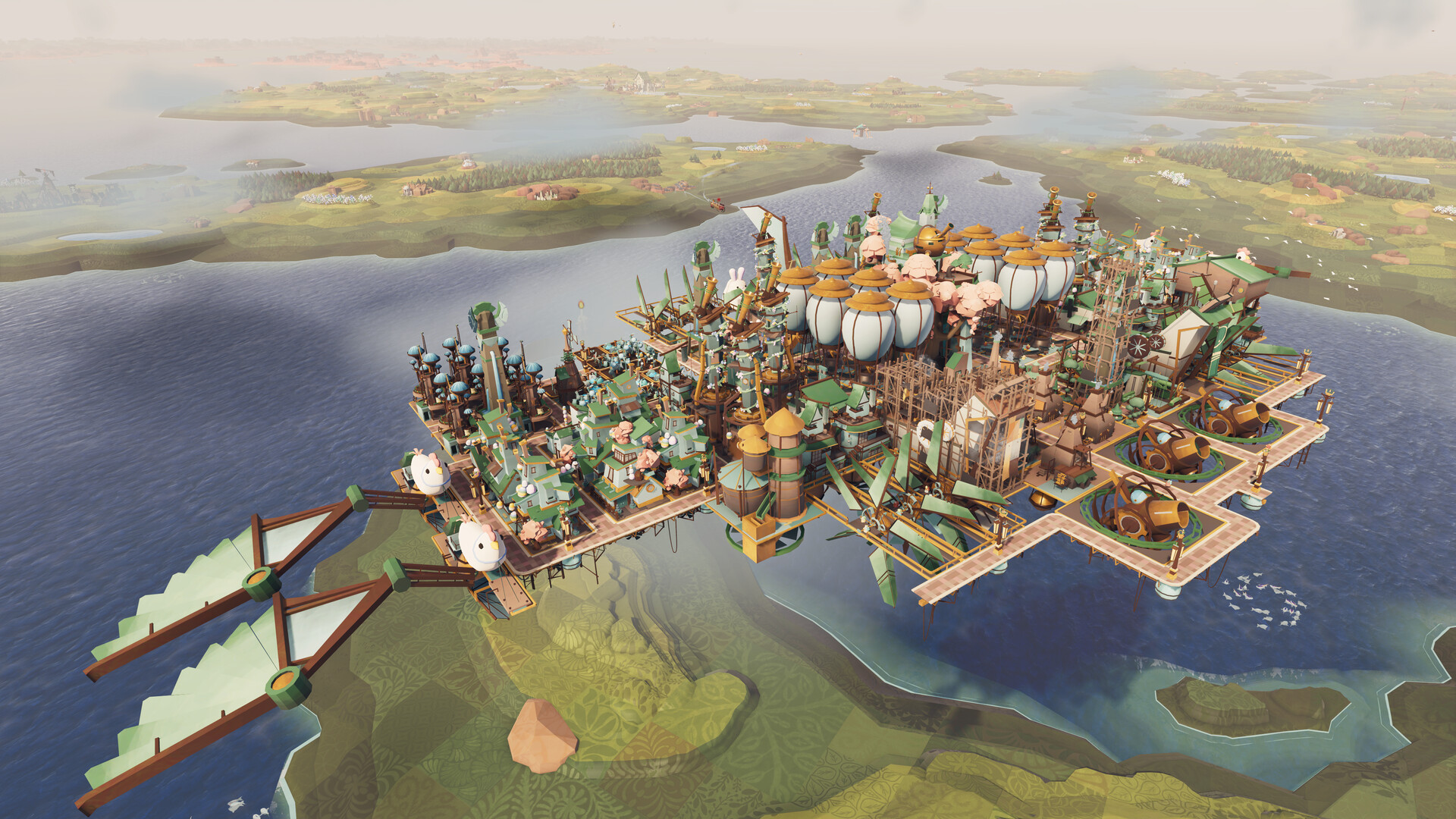
Keeping Your City in the Air
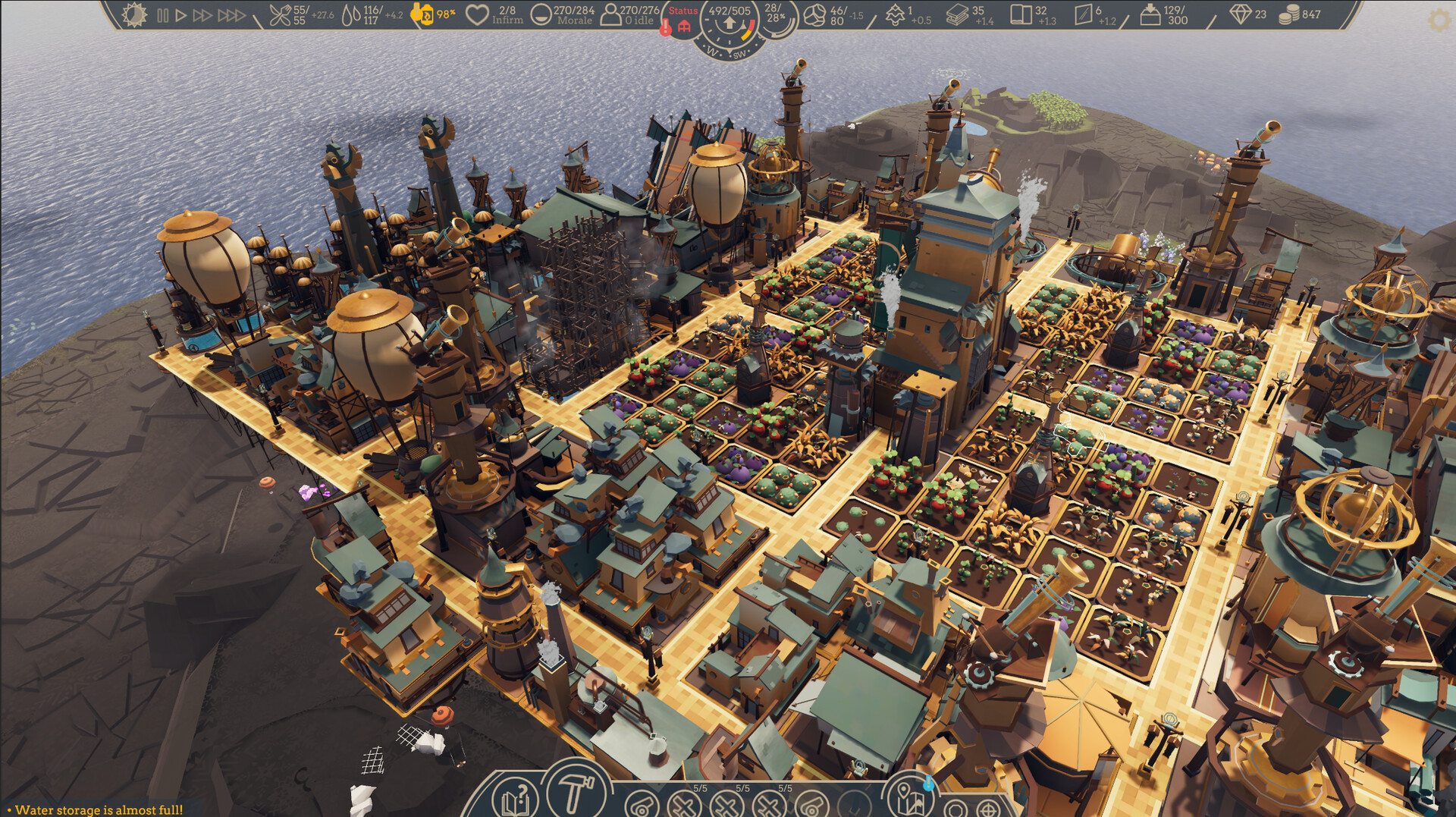
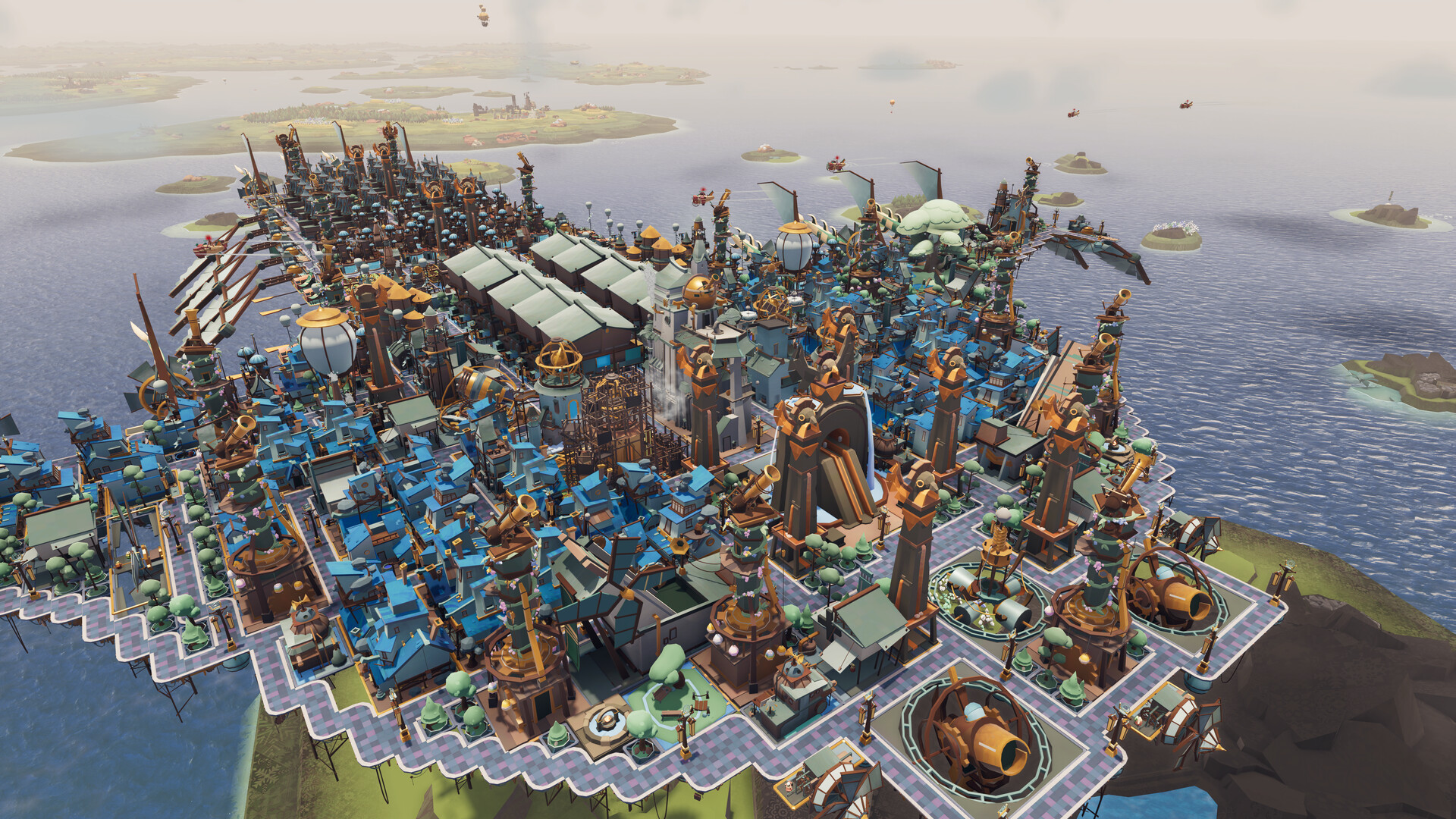
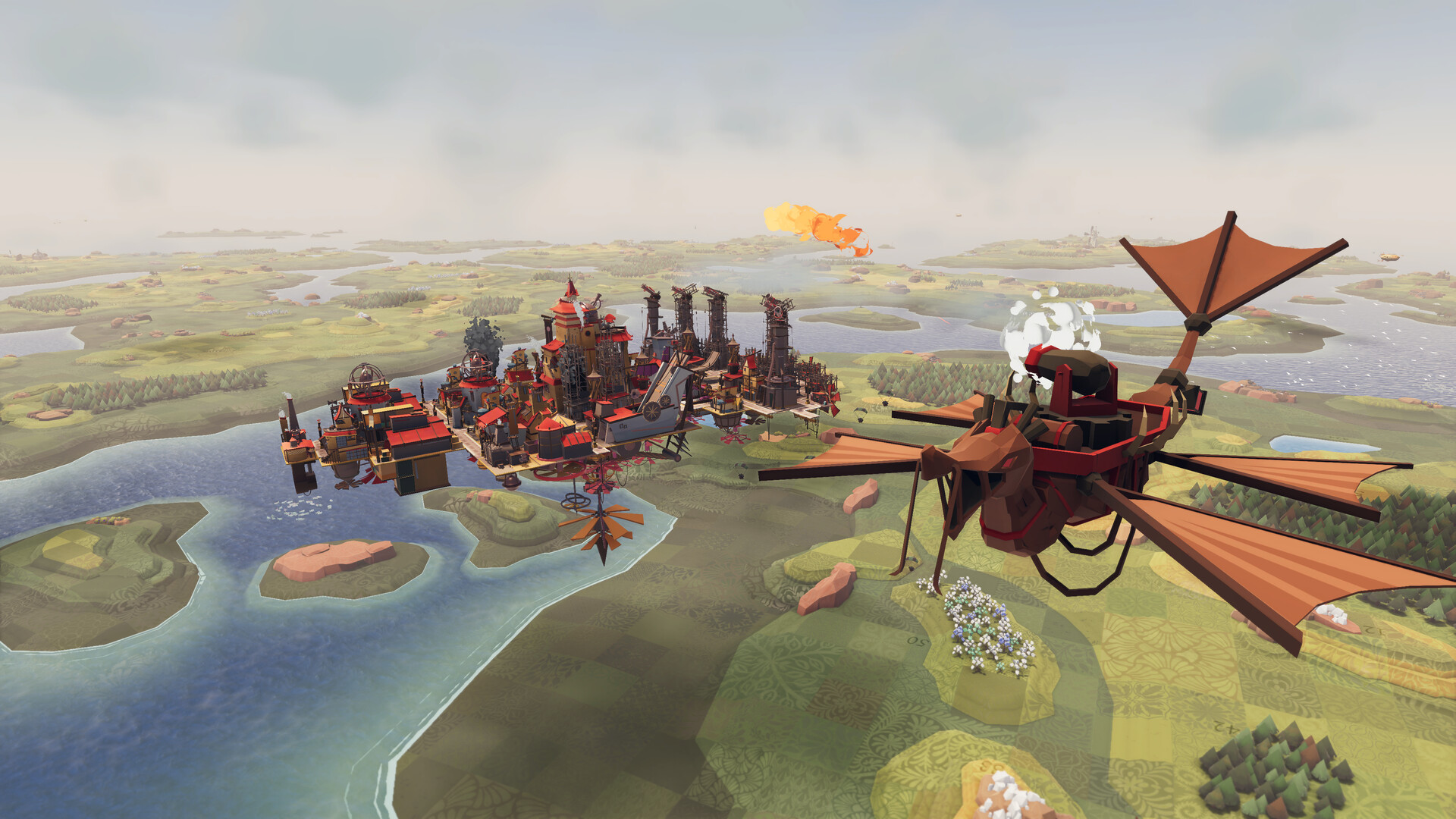
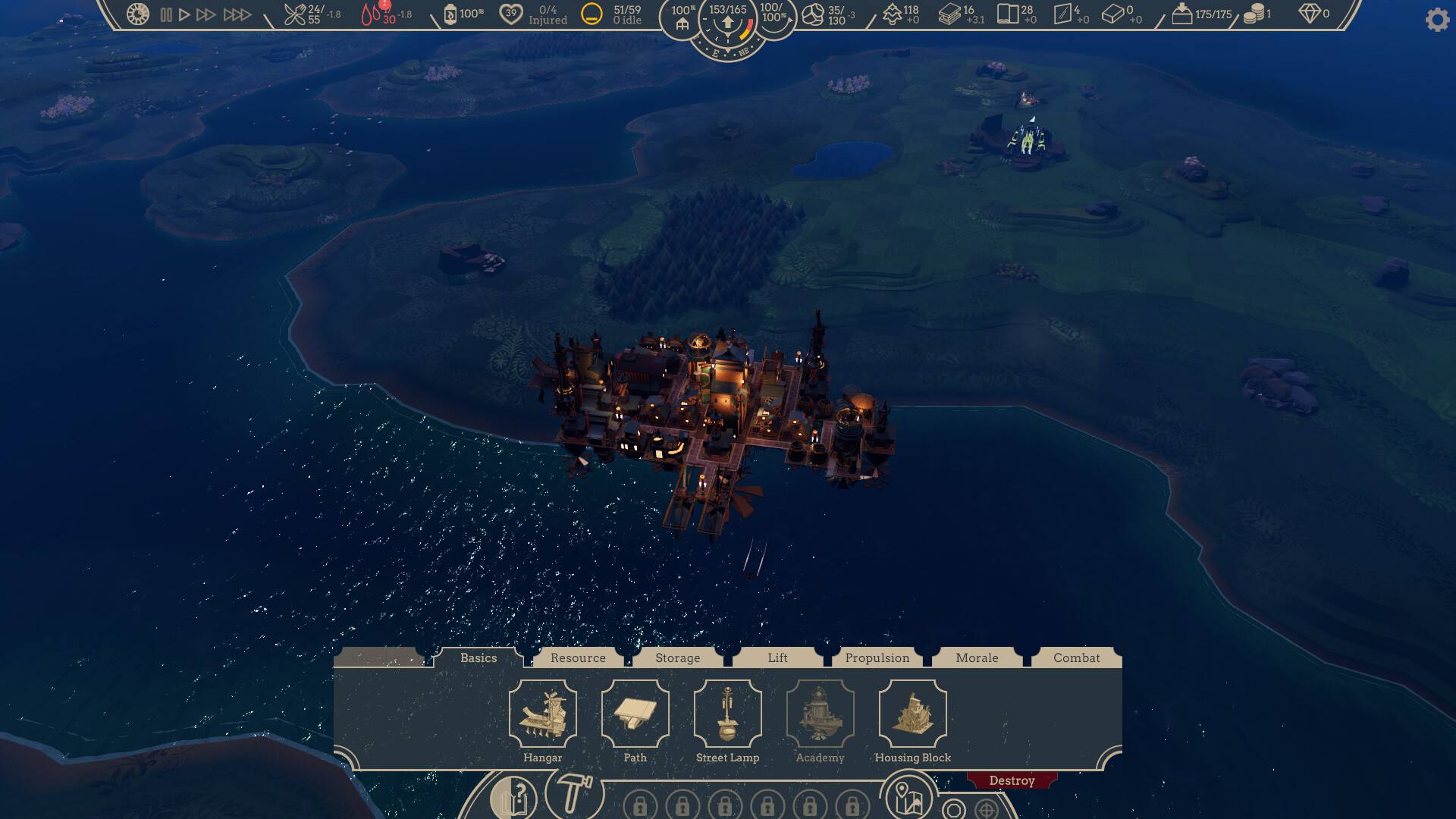
Airborne Empire’s daily bread is the delicate, tactile act of keeping a city aloft. You place lift buildings, balance mass across platforms and tune propulsion so your whole contraption doesn’t tip nose‑first into a mountain. It turns city building into a physics puzzle: every new foundry or market adds weight and changes center of gravity, so you actually think about where to put the bakery. Running resources, housing citizens and satisfying morale are still important, but they’re folded into this vertical, floating logic. I love the constant small calculations—will this winged winglet counterbalance that cogged-up foundry?—and the moment when everything hums and you realise your city is finally stable.
When Pirates Meet Propulsion
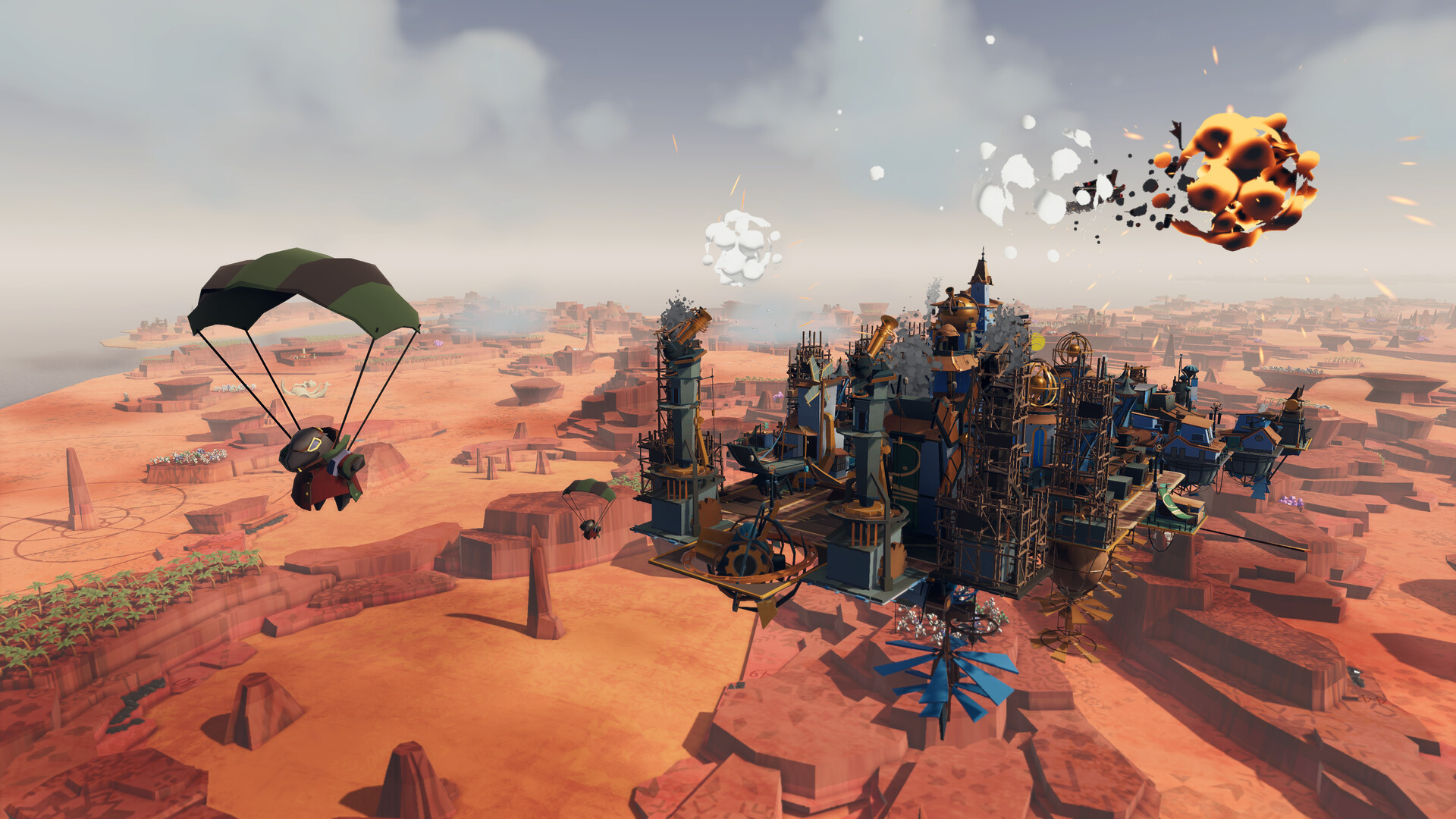
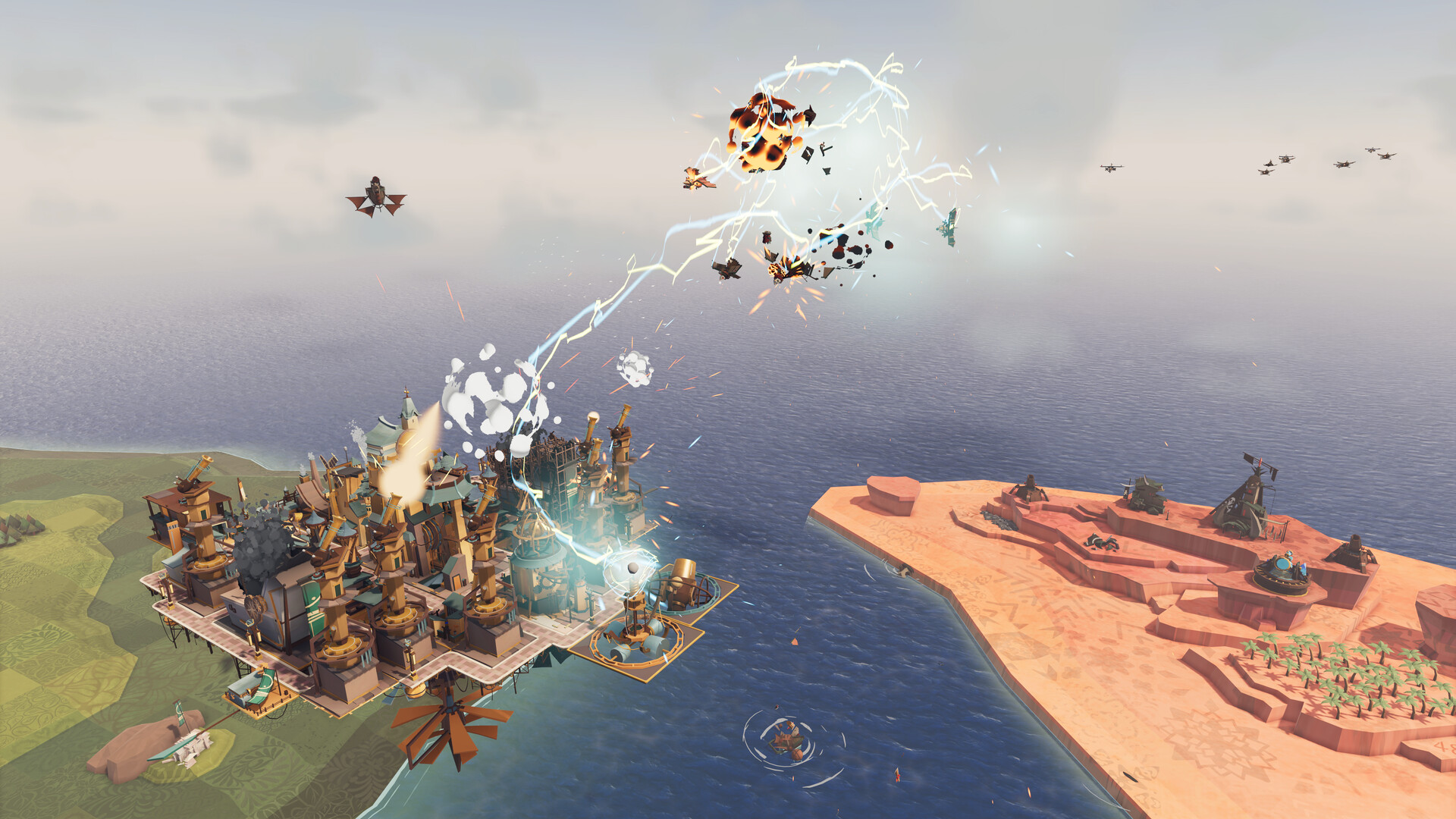
Combat is the new spice that not everyone asked for but many will enjoy. You outfit the city with cannons, Tesla arrays and aircraft, then choose whether to face pirate skirmishes head on or kite past them while raiding outposts. The combat feels strategic rather than twitchy: positioning your defensive turrets, protecting key lift modules and timing special abilities matter more than pixel‑perfect aim. That said, some reviews are right—early builds felt a bit clunky in how ships behave and how attacks spawn; I’ve been frustrated by sudden waves when only one defensive cannon stands between me and a very sad, very falling bakery. Still, planning builds that double as mobile fortresses is deeply satisfying and gives you a rewarding “aha” when a design withstands a raid.
A Living Sky to Explore
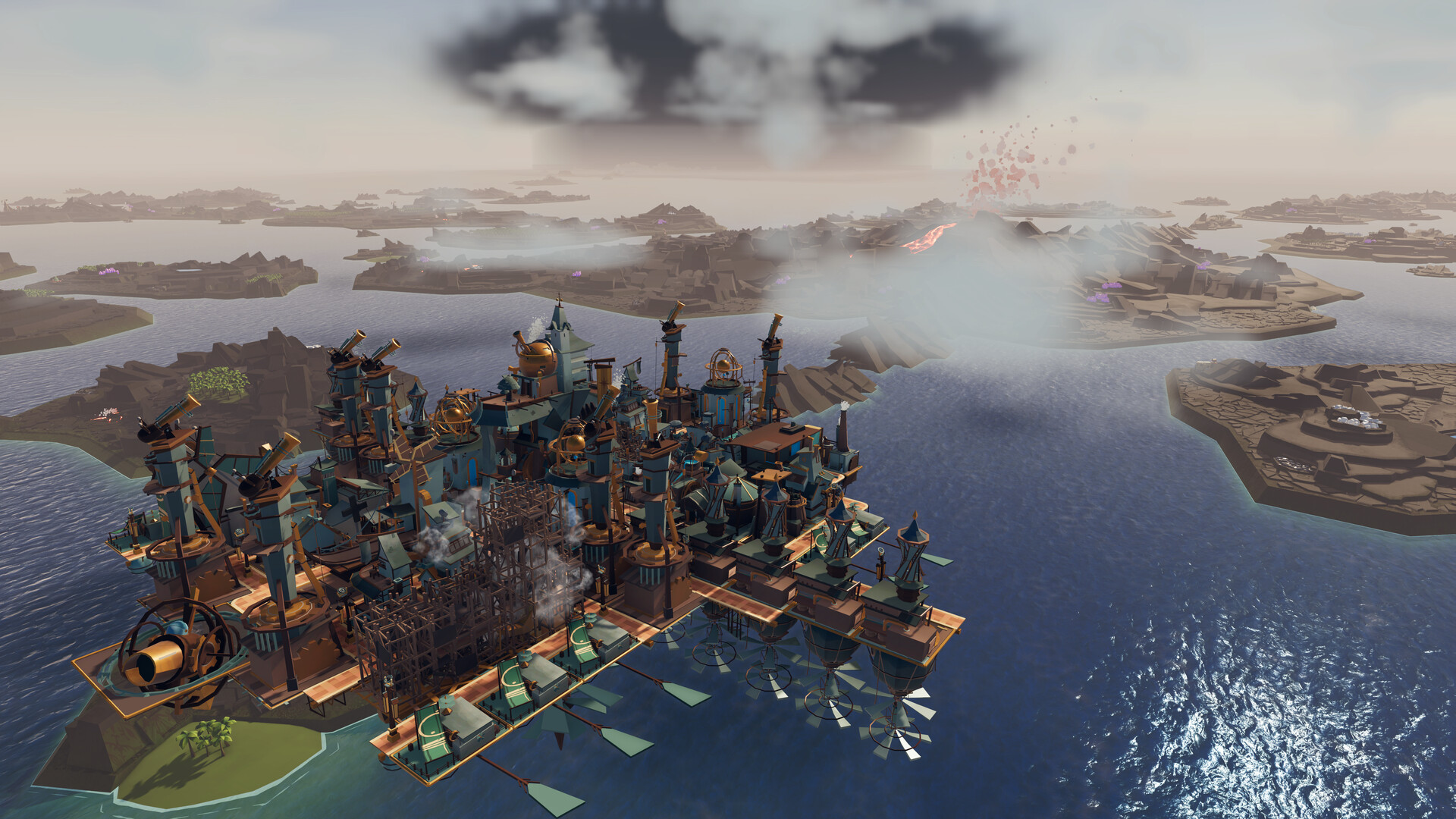
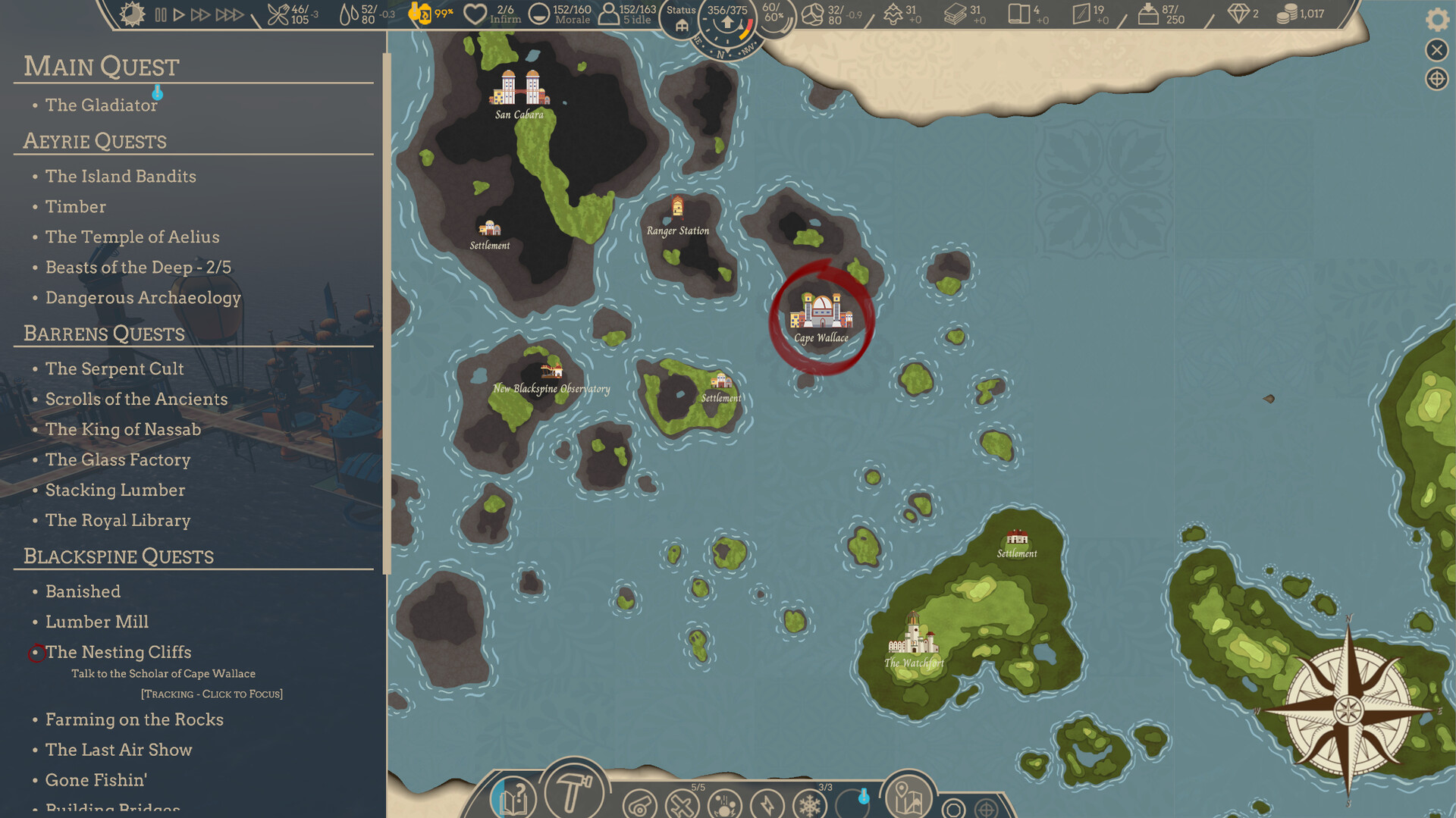
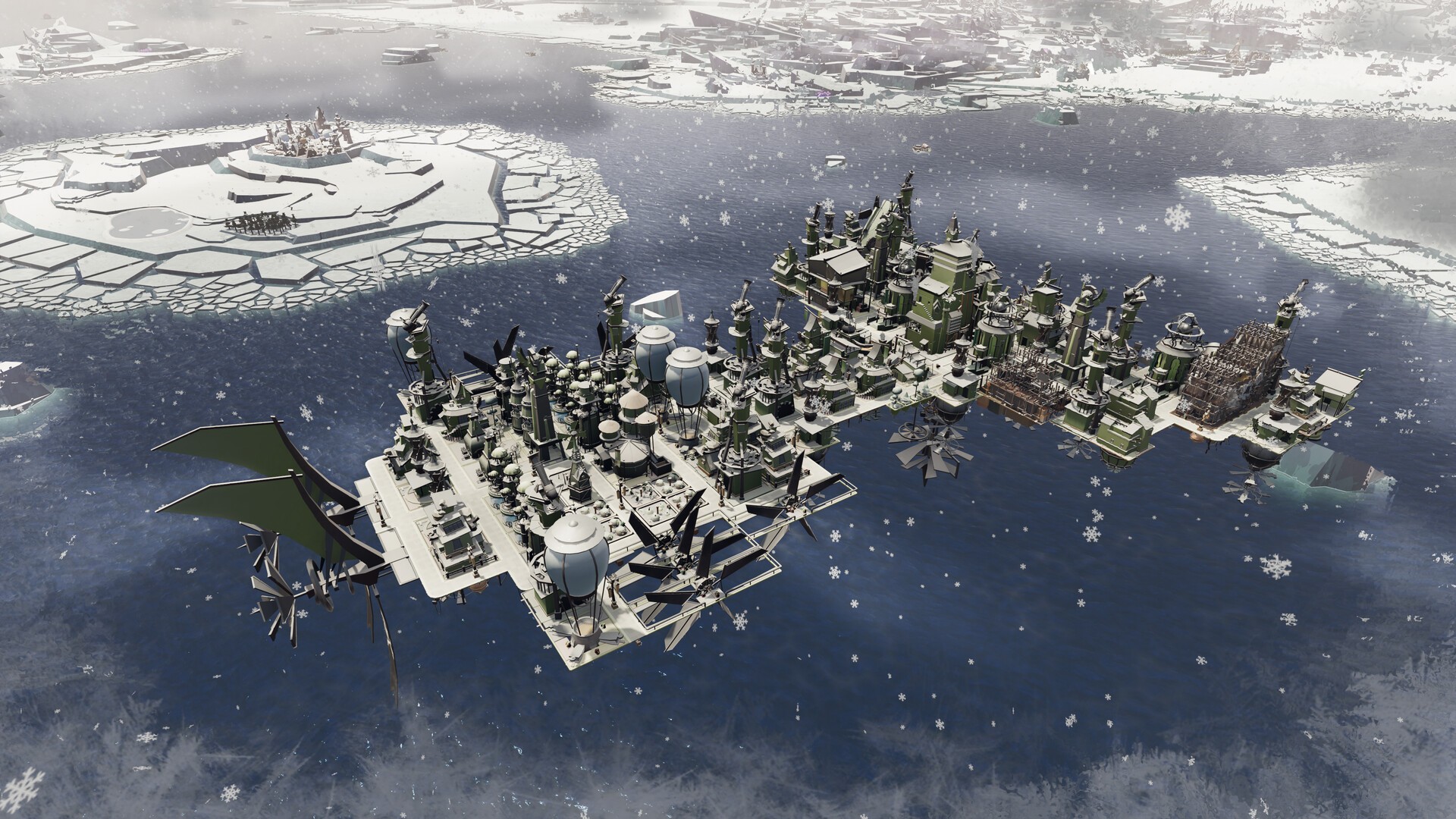
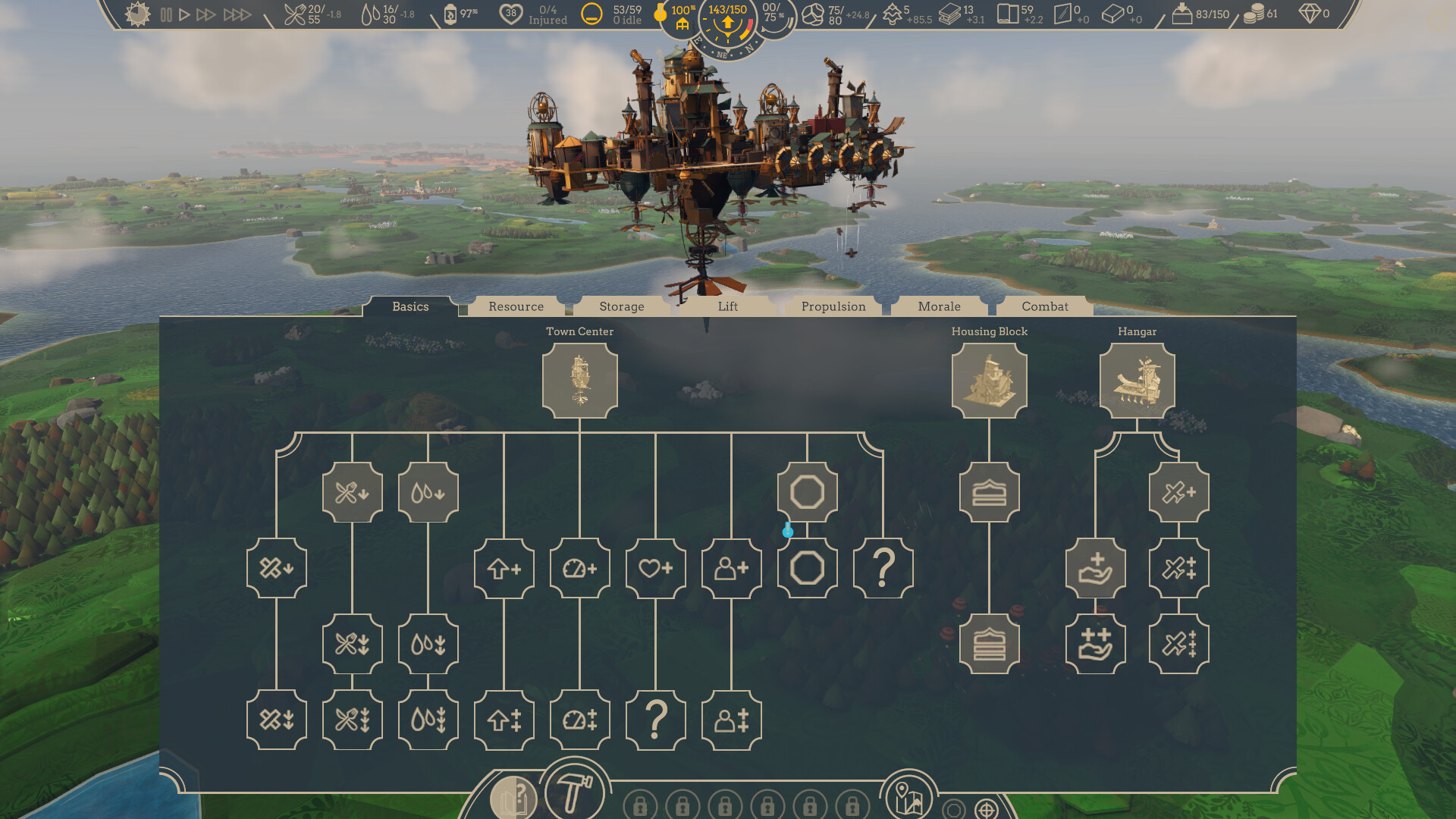
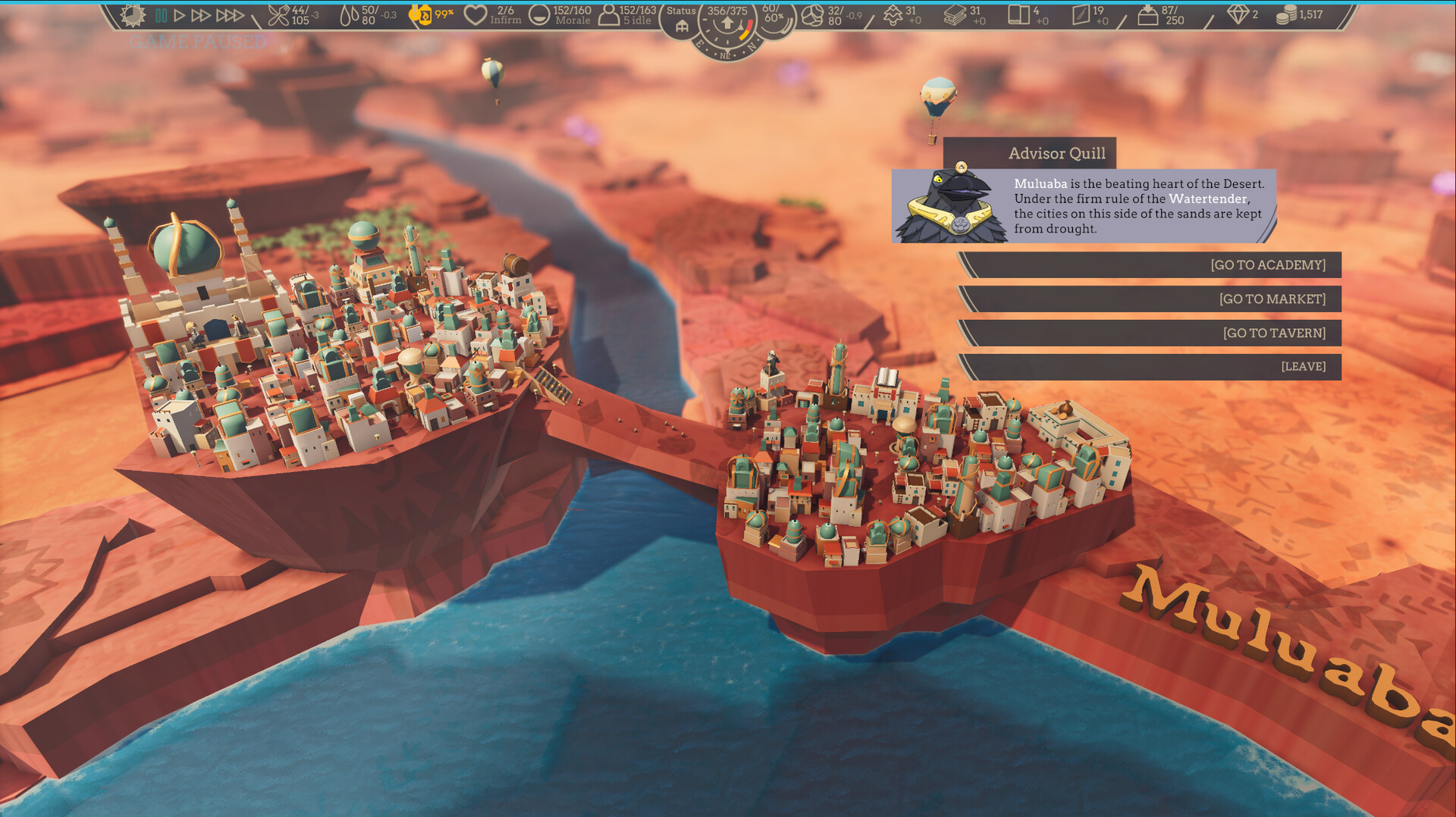
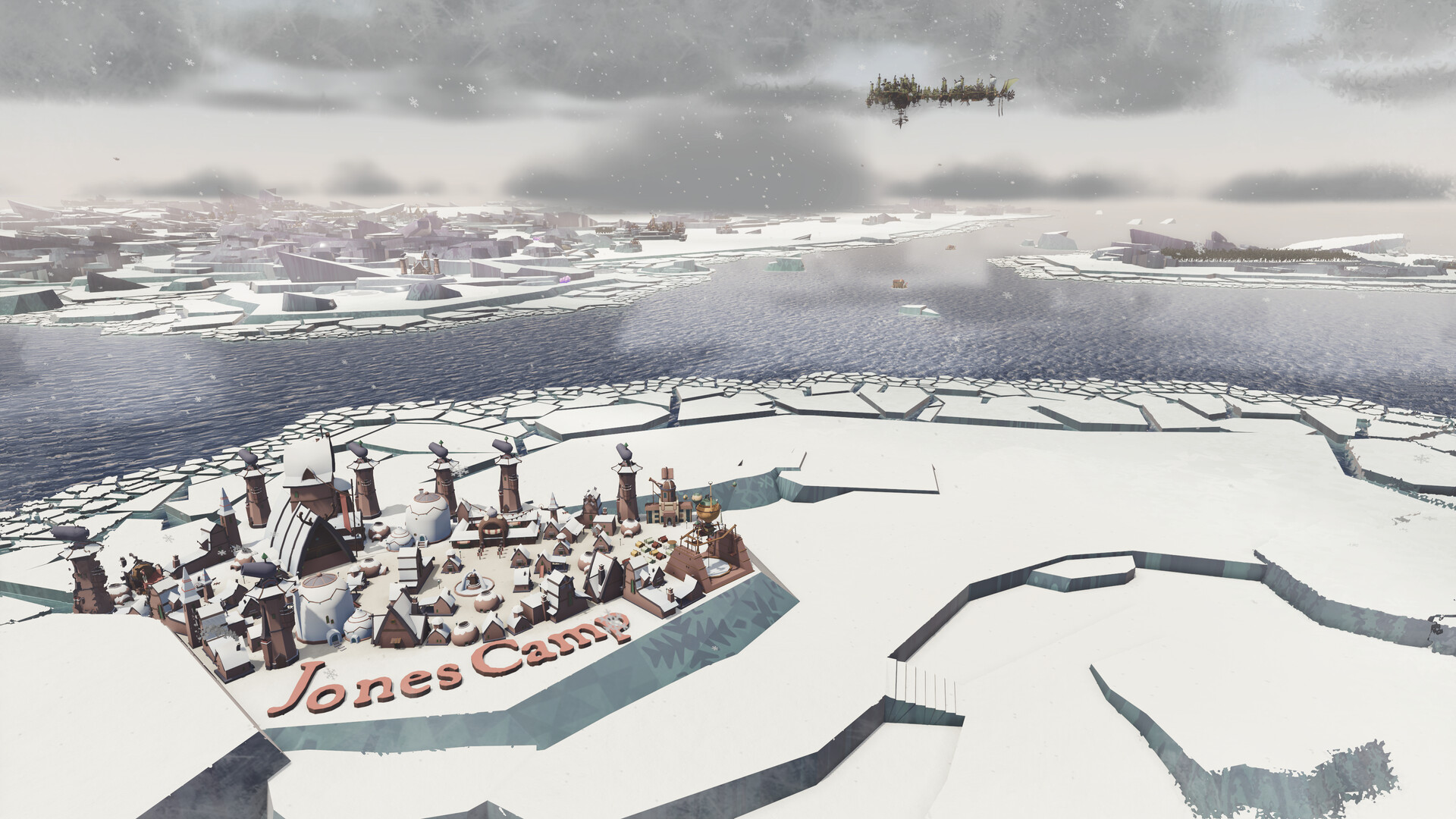
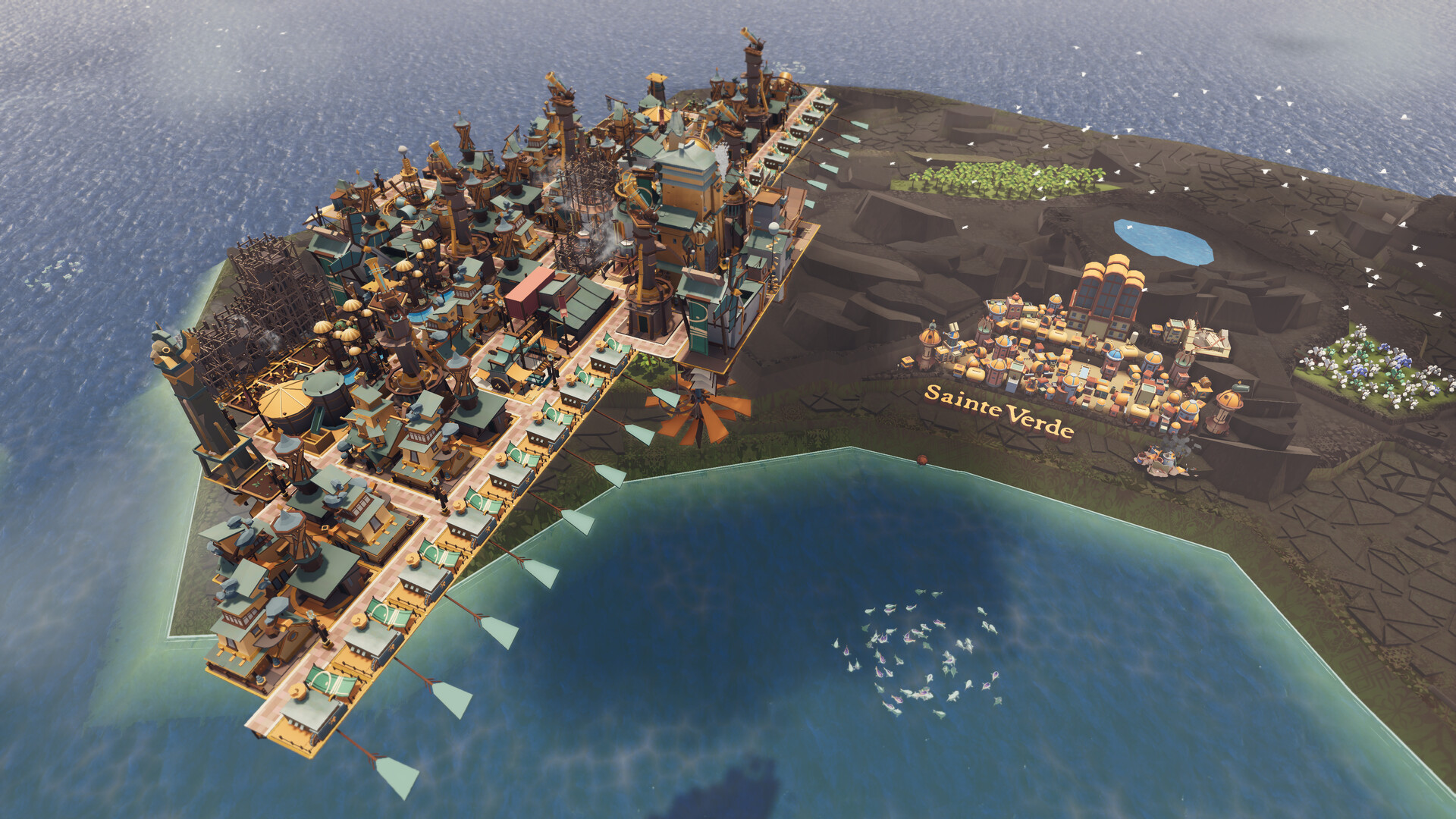
Exploration is genuinely rewarding: five distinct biomes—from lush Aeyrie to volcanic Blackspine to icy Kingsfell—hide resources, characters and story beats. Visiting ground settlements gives you quests, trade opportunities and tech to research back on your flying metropolis. Research itself is a chunky, enjoyable loop: unlock better lift, new weapons, morale buildings and quality‑of‑life upgrades that feel impactful. The city can be remixed as you go, and modes like Creative or Pacifist let you emphasize the parts you like—whether tinkering with propulsion or skipping combat entirely.
A Skyborne Palette and Soundtrack
Visually the game favors a colorful, slightly cartoony map that won’t confuse you with photorealism, but it’s coherent and charming. Characters—some will call them caricatures, others find them delightful—have personality in their writing, which alternates between silly and oddly touching. The soundtrack is a particular highlight: jaunty, varied and the kind of music that makes cloud travel feel cinematic. Performance was smooth on my Windows test; build menus can feel a bit slow at times and camera placement while building takes practice, but nothing that breaks the core experience.
Systems That Reward Thoughtful Play
Under the hood, systems like morale, resource throughput and tech progression interact so choices compound. A defensive layout that protects lift modules keeps your supply chain intact; a misplacement can cascade into shortages and unhappy citizens. There are options to tweak difficulty and even a dedicated Survival mode if you want waves of escalating pirate fury. For players who loved Airborne Kingdom’s calm planning, this adds more knobs and levers—some adore that complexity, others grumble it's fiddly—but I found the extra depth a welcome challenge.
Airborne Empire is an imaginative and well‑crafted follow‑up that turns the flying‑city idea into a richer, occasionally rambunctious experience. It’s ideal for players who enjoy systems that interact (physics, resources, combat) and don’t mind fiddly micro‑management or camera quirks. If you loved Airborne Kingdom, this is a must‑try; if you prefer serene builders without combat, try Pacifist or Creative modes first. Overall, I recommend it—bring a level of patience and a spirit for experimentation, and the skies are yours.
Pros
- Original, addictive concept of a mobile, physics‑driven city
- Great soundtrack and charming art that sell the world
- Meaningful systems: lift, balance, propulsion and combat interact well
- Multiple modes (Creative, Pacifist, Survival) for different playstyles
Cons
- Combat and enemy spawn behavior can feel clunky at times
- Building grid/camera quirks and UI speed can irritate meticulous players
- Character writing divides opinion—some find it silly or caricatured
Player Opinion
Players are roughly split between pure admiration and picky criticism, which is telling. Many reviews praise the game’s charm, music and the fresh twist on city building—lots of people call it a cozy, replayable gem and adore the feeling of a mobile metropolis. Others celebrate the added combat as an exciting tactical layer, while a vocal minority finds it clunky or intrusive compared to the quieter pace of Airborne Kingdom. Recurring gripes include building alignment, camera behaviour during placement, and occasional heavy pirate waves that feel unfair. Overall the community highlights great dev engagement and steady improvements, so if you like tinkering and exploration you’ll likely find something to love.